Showing posts with label playthings. Show all posts

Monday, January 13, 2025

Picturing The Possible Design Origins Of Steiff's Beloved Jocko Chimpanzee

Steiffgal was working a project for one of her auction house clients and came across this charming image. Well, actually it came to her... probably because Steiff is usually in her head at any given time!

Image from Potter & Potter Auctions
What we have here is a 28 x 37-¼" printed broadside from around 1913. It was published in Hamburg, Germany by Adolph Friedländer, a man who ran a lithography company that produced over 9,000 posters between 1872 and 1935. Most of these were for performers and traveling acts, including magicians and circus and vaudeville performers. The words on the poster read Every Evening / Jeden Abend / Tous Les Soirs, and it is illustrated with a performing chimpanzee in four vignettes: modeling a tuxedo and top hat with a cane and cigarette; tossing a barrel over his head; riding a bicycle down a flight of stairs; and walking on stilts. The three languages on the poster suggest that this primate performance was international, or at least appeared in the UK, Germany, and France. This item is lot #256 at Potter & Potter Auctions' February 1, 2025 Wunderkammer sale, and is estimated at $2,000-3,000.   

Image from Zwiggelaarauctions.nl

So what is the possible connection to Steiff here? It is interesting to note that starting around 1910 or so, trained, performing chimpanzees were the darlings of the entertainment world. They appeared in circuses, in sideshow and venue acts, and in publicity photos and postcards - usually dressed in scaled human clothing. Steiff has always been aware of current events, media trends, and popular culture as inspirations for new product design. This started around 1904 or so, when the company produced a licensed version of Peter Rabbit - who at the time was making headlines in the children's literature world. Other history/cultural/celebrity productions of basically the same era included a series of dolls based on the Happy Hooligans comic strip; Caesar, the King's dog; and Tige (Buster Brown's dog), among many others. 

Primates have appeared in several forms in the Steiff line since the company's catalog debut in 1894. However, in 1909, Steiff introduced its most realistic, lifelike, and appealing brown mohair chimpanzee. Coincidence or not?

Image from Steiff's 1913 catalog

This fully jointed primate pattern - which would "officially" be named Jocko in 1929 - had authentic body and limb proportions and lifelike felt hands, feet, and facial features. Medium sized Jockos onward sported a white mohair chin and featured felt eye pockets. This ocular detailing meant that their brown and black glass pupil eyes were surrounded by raised felt eyelids. Brown mohair Jocko was produced in 15 sizes, ranging from 10 to 90 cm, from 1909 through 1943 overall.  

Image from Zwiggelaarauctions.nl

Bringing this discussion full circle, Steiffgal found an almost identical version of this poster, except that it had the words "The great consul Patsy" written in large letters across the bottom. She could not discover additional details on Patsy, but infers that the chimp pictured may have been named Patsy. Patsy was a popular boy's name in the early 1900s, and derives from a Latin word meaning “noble,” “nobleman,” or “patrician.” It is intriguing to think that someone from Steiff may have seen this poster, or performance, or one like it, and decided that it was time to elevate the company's chimp design to match the popular aesthetic of the time. And collectors more than a century onward are thanking them for this really wise choice!

Steiffgal hopes this discussion on Jocko's possible design origins has been a feast for your eyes!

Have a question about one of your Steiff treasures? Let's talk! Click here to learn more.

Sunday, December 11, 2022

You'll Be All Ears Over This Happy Hoppy Hybrid Hare!

Talk about a rare hare... combined with LOVE AT FIRST SIGHT! That's was exactly Steiffgal's reaction when it came to an absolute rarity she spotted on eBay recently. Take a look at this remarkable little Steiff prewar rabbit... and just try not to fall in love with it as well!

This tiny guy is a super cool bunny made as a woolen miniature, but with mohair detailing. He is pictured here on the left and the photo is from ebay. According to the eBay listing, he is a..."Rare Steiff Wool Rabbit is approximately 5 inches high. Has mohair ears with underscored FF button. Glass eyes. 1935-1939." Additionally, he is lined in wires and is poseable, probably head jointed, and detailed with glass pupil eyes and a small painted mouth. Steiffgal suspects he left the factory in Giengen with clear monofilament whiskers. This happy handful was made in 7 and 10 cm (measured without ears) in light brown and white or all white from 1935-1939 overall.

Steiff's woolen miniatures debuted in the very early 1930s. They were introduced as a low cost, entry level priced line for the company at a challenging economic period. The first woolies were birds and bunnies; their natural forms and shapes were easily interpreted in Nomotta wool pom-poms of different sizes and color combinations. As time went on, Steiff produced more and more elaborate woolen miniatures with greater detailing. These included other materials - like lace and ribbons - and accessories - like perches, voice boxes, and aviaries - in their designs in addition to Nomotta pom-poms.

In the mid 1930s, Steiff made a number of woolen miniatures that included relatively expensive woolen mohair fabric.
This material was used to create the ears of several different dogs (including a St. Bernhard, Chin-Chin, and King Charles Spaniel), a few rabbits (including one on skis), and even a really unusual Teddy bear made from long white yarns. Given their elaborate construction, like the rabbit under discussion here today, Steiffgal suspects that the introduction of these "hybrid" mohair/woolen miniatures was Steiff's way of "upscaling" the woolen miniature line a bit. The mohair ears were "stitched into" the core of woolen threads to keep them in place... or at least that is how the mohair ears on the woolen miniature Teddy bear are engineered. You can see this terrific Ted pictured here on the left; he was made in 22 cm from 1936-1938.

Today, it is extremely rare to find Steiff's highly sought after woolen miniatures with mohair features on the secondary market.
That is one reason Steiffgal was tickled pink to see this one on eBay. Given their appeal and petite scale, it is very possible that many were "loved to death" and simply lost to time over the years. Steiffgal also suspects that in reality, very few were actually made. The mid- to late 1930s were really tough years in Germany and it is quite probable that supply chain and labor issues really limited the number actually manufactured and sold during that time. And, of course, any enthusiast lucky enough to have one of these absolute rarities in their collection already is probably not in any rush to move it along! It's just supply vs. demand at its finest. 

Steiffgal hopes this discussion on woolen miniatures with mohair features has been a cheerful earful for you. 

Have a question about one of your Steiff treasures? Let's talk! Click here to learn more.

Saturday, September 3, 2022

It's A Teddy Bear Affair At Ladenburger Spielzeugauktion's September 24th, 2022 Steiff Sale!

Is it time to add something really special to your Steiff collection? Of course it is! Then check out the vintage to antique button-in-ear temptations on offer at Ladenburger Spielzeugauktion's upcoming Fall Auction. Over 100 carefully curated Steiff treasures go under the hammer on Saturday, September 24th, 2022. The sale offers some breathtaking examples, including several outstanding prewar bears that caught Steiffgal's eye for their rarity and condition. Check out this terrific trio and just try and resist their charms - and backstories!

This first bear highlight can't help but put you in a jolly mood. This is lot #3040, a lovely and distinctly childlike example of Steiff's Happy bear. He has a starting bid of 1,800 euro. This cub is cataloged in part as, "Happy, one of the highlights of the auction, with button, block letters, long trailing f, big glass eyes, pointed mohair, long snapped off arms, clearly hump, 51 cm, here and there places with mohair loss, very expressive, produced 1926-27, small holes at the felt paws, but otherwise beautiful." 

Happy dates from a joyful time in the company's product development history - the mid to late 1920s. It was during this era that several of Steiff's beloved named, novelty bears were introduced. These included Teddy Rose, Teddy Clown, Petsy, Teddy Baby, and of course, Happy! Happy was produced for a short time - from 1926-1927 only - in relatively low numbers. As such, examples are very few and far between on the secondary market. That is one of the reasons that this fine Ted - in an important size and in sweet condition - should catch the eyes of enthusiasts worldwide. FYI: the most famous version of Happy was purchased by an agent for the Volpp family at Sotheby’s in London in 1989 for £50,000 to celebrate a wedding anniversary; the underbidder was the British Royal Family!

It's no joke that original prewar Teddy Clown bears top the wish lists of many vintage Steiff collectors. And this next highlight is really dreamy in many ways. Here we have lot #3050 - a charming and petite brown tipped Steiff Teddy Clown - with an opening bid is 1,300 euro. He is cataloged in part as, "Clown bear, with button, block letters, long trailing f, produced 1926-27, 25 cm, pointed mohair, at 1 felt paw a hole, mohair is except of 1 place at the right shoulder in good condition, very expressive, original hat and ruff, 25 cm." 

This bear's factory original accessories make him one well attired Ted. But, one question that Steiffgal often hears is, "How do you know the hat and ruff on a Teddy clown are original to it?" Here are a few guidelines. First, make sure that the hat and the ruff have equal wear, loss, dust, or other condition issues to each other, and also to the bear. Technically, the bear, hat, and ruff should be the same age. As such, they should all have had the identical display, play, or storage history. If things don't align in terms of wear or loss, it is possible that the accessories are replaced. Steiffgal has also noticed that original Teddy Clown felt hats are stuffed with excelsior and have a cardboard disk at their base. This is to  hold their shape and to secure them in place. Check for these details. And finally, it has been her observation that for the most part, the color of the pom poms on the hat should match the ruff or its trim. If these are not in the same color family, it is possible that some or all of the accessories are not original to the bear.

And finally, this third terrific Ted is one heavy metal favorite.
Here we have lot #3055, a fantastic and very early Steiff rod jointed bear. 
 His bidding starts at 3,500 euro. He is cataloged in part as, "One of the highlights of our auction, with elephant button, shoe button eyes, original sealing wax nose, peach-colored mohair, 5 claws, produced 1904, retouched felt paws at the feet, clearly distinct hump, long snapped off arms, otherwise mohair in very nice condition, extremely expressive, extremely rare in this color."

There's nothing not to love about this extraordinary bear. His color is off the charts great; his deep apricot mohair looks lush and still radiant after all these years. He retains his elephant button  - as if there were any doubts on his origins or brand! His gutta percha nose is like a tiny work of art with its one of a kind shape and traces of his maker's fingerprints. And his excelsior stuffed body has aged so well. Such tight and heavy filling was necessary to hold his heavy, large metal jointing solidly in place in his torso. Hubba, hubba, hubba!


Steiffgal hopes this discussion on these museum-quality Steiff cubs has given you the warm and fuzzies!

For more information about Ladenburger Spielzeugauktion upcoming Steiff event on September 24th, please click here!

Have a question about one of your Steiff treasures? Let's talk! Click here to learn more!

Sunday, January 23, 2022

It's Time To Throw The Book At This Amazing Antique Steiff Character Doll!

Let's take it to the Max with this week's blog story! Here we have a darling - but devilish - literary character who is well known throughout Germany. Take a look at this early Steiff doll and see it's always "double trouble" when he makes an appearance.

Here we have Steiff's Max doll. 
He is 30 cm tall, fully jointed, and made primarily from felt. He wears grey felt shoes, cream felt pants, a brown felt shirt, and a blue felt blazer detailed with blue felt buttons. His legs are made from tan linen. His oversized hands and head are made from flesh colored felt. His face comes to life with black bead eyes, prominent horizontal and vertical seaming, painted eyebrows and lips, and pert, oversized ears. You can't help but notice his shock of long, jet black hair which is made from mohair. You can see two slits in his left ear where his Steiff button would have been, but sadly this hardware has been lost to time. Max appeared in the Steiff line in 30 and 35 cm from 1910-1926.

Steiff has a century plus long tradition of interpreting famous fictional and literary characters... and this doll is a perfect example of that.
Max - and his brother Moritz - are the "stars" of a legacy German book called Max and Moritz (A Story of 7 Boyish Pranks). It was written by author Wilhelm Busch (German, 1832-1908). This work was first published in 1865. This darkly comedic tale is written in verse and consists of seven “chapters.” Max and Moritz are the ultimate troublemakers and they cast their shenanigans throughout their town. The book, still a favorite nearly 160 years onward, has become an integral part of the German culture and psyche. Author Rudolph Dirks credits Max and Moritz as the inspiration behind his early and important comic strip The Katzenjammer Kids which debuted in 1897. And even today, some German parents are known to have named their twin sons after this troublemaking team.

Given his appeal, Max (and his brother) were often featured in Steiff's early 20th century advertising.
Here on the left, you can see one of Steiff's print marketing images from around 1912/13. You can click on the image to make it bigger. It features the silly siblings creating havoc at a military post. This is not unexpected, given their reputation for troublemaking! Max has made his way into the soldier's booth - and appears to be picking his nose without a care. And his brother Moritz has somehow gotten his hands on the soldier's firearm and is running away with it. Steiff's marketing images from this period - just like this one - are usually comical, multilayered, ironic, and extremely well executed. The picture is from Dottie Ayers and Donna Harrison's Advertising Art of Steiff, Teddy Bears and Playthings.

It should be no surprise that Steiff really "Max'ed" out on its Max doll production during both the pre- and postwar periods.
Prewar, Max and Moritz were produced as 25 cm “record” or pull toy dolls on wooden wheels from 1916-1926 overall. Fast forward, Steiff produced Max and Moritz as tiny 10 cm rubber dolls from 1962-1967. Their final appearance in Steiff's catalog, as far as Steiffgal can tell, was as a pair of 30 cm tall trevira velvet puppets pictured here on the left. These charming characters appeared in the line from 1979-1982. As you can see, their detailing, materials, and construction were updated to reflect the aesthetic of the era. 

Steiffgal hopes this discussion on Steiff's Max storybook doll has been a good read for you.

Have a question about one of your Steiff treasures? Let's talk! Click here to learn more.

Saturday, December 12, 2020

Putting On A Show Of Support For Steiff's Fantastic And Early Handpuppets!

Hands in the air if you love Steiff puppets!
These great novelties are universally treasured by Steiff, toy, and puppet collectors, and are a great cross-collectible. Although the first Steiff catalog was produced in 1892, hand puppets did not appear in these publications until 1911. However, the designs for a puppet bear, cat, and dog had all been registered in a German patent office since 1909. Through pure serendipity - in the best possible way- Steiffgal recently met an amazing collector with a passion for Steiff's puppets, especially the company's pre-war rarities. Come learn more about puppets and what makes Steiff's puppets so spectacular from the perspective of a lifelong puppet enthusiast.

Steiffgal: Please tell us your name, where you live, and what you collect.

Marcus Sampaio: My name is Marcus Sampaio. I was born in Salvador, the birth city of Brazil. In 2009 I immigrated to Canada and since then I’ve been living in Toronto, an amazing multicultural city. I’m a passionate collector of all sorts of puppets from different parts of the world.

Steiffgal: How did you get interested in puppets? Please describe your puppet collection, and how you store or display it.

Marcus: Puppets have always fascinated me since I was a little kid. All the great memories of attending marionette shows and playing with hand puppets — fostered by my parents during my childhood — led me to a side career as a puppet performer and theatre producer of A RODA puppet Company

My collection is very broad. I have Shadow Puppets made of animal hide, Wooden Marionettes (also called string puppets), Rod Puppets and, of course, the beloved and most known Hand Puppets! Some were once used professionally but many are well loved old toys.

Steiff stole my heart at the very first moment I saw a Jocko puppet. Today I have quite a large collection of these adorable Steiff critters and a soft spot for monkeys. Within the plush world, I also have puppets by interesting manufacturers like Schuco, Kersa, Eduard Cramer, Hermann Teddy, Grisly, Clemens, Anker, Invicta, SAF, Alpha Farnell, Hamiro and the list goes on…

I live in a condo and I don’t have much display space available. So most of my puppets are stored away, sadly! I use a barrister bookcase to display my favourite plush puppets. Some other special ones keep popping out of the trunks and hanging around the house.

Steiffgal: Do you actually use the puppets as puppets in performances? Or are they more like fine collectibles that are appreciated for their beauty, aesthetics, and rarity?

Marcus: I used to perform with the wooden puppets created by my artistic partner Olga Gomez, within the context of our puppet company A RODA in Brazil. The wooden puppet on the left is from A RODA's show "Love and Madness." Currently I collect puppets for their beauty, craftsmanship and also to preserve such an important part of the culture they come from. People would be amazed to know that pretty much every corner of the world has a form of puppetry.

Steiffgal: What about Steiff brand puppets particularly catches your eye?

Marcus: Steiff is truly an amazing brand! The attention to detail, craftsmanship and understanding of how toys are used, impress me. They are not only incredibly beautiful but they also function very well technically, as puppets. Their designs are so well thought out. Just as an example, if you take a close look at the back of a mid-century Steiff hand puppet, you will notice that it is slightly wider than its front. This pattern fits the puppeteer’s hand very nicely and even gives the puppet a nicer shape. 

Steiff is also very consistent in their production. Once I had 2 Dally Dalmatian hand puppets and decided to compare their black dots. I was amazed to see that they were identical but at the same time, their expressions were slightly different, as if they had different souls. I don’t see this design consistency and attention to detail very often when it comes to toy puppets.

Steiffgal: What are the top three favorite puppets in your collection, and why?

Marcus: Wow, that’s a tough one! My collection is so wide and the puppets that I have are so different in styles, origin and materials that it is hard to compare and pick one. But I can say that some pre-war Steiff Jockos are among my favourite plush puppets, probably due to my early memories of a play with a monkey puppet climbing a coconut tree. One named Blondie is pictured here on the left. My other two favourites are a late 19th Century Czech marionette of a noble man with a moustache and a full body Japanese Bunraku puppet.

Steiffgal: And finally, what is the holy grail you would like to find to add to your puppet collection? 

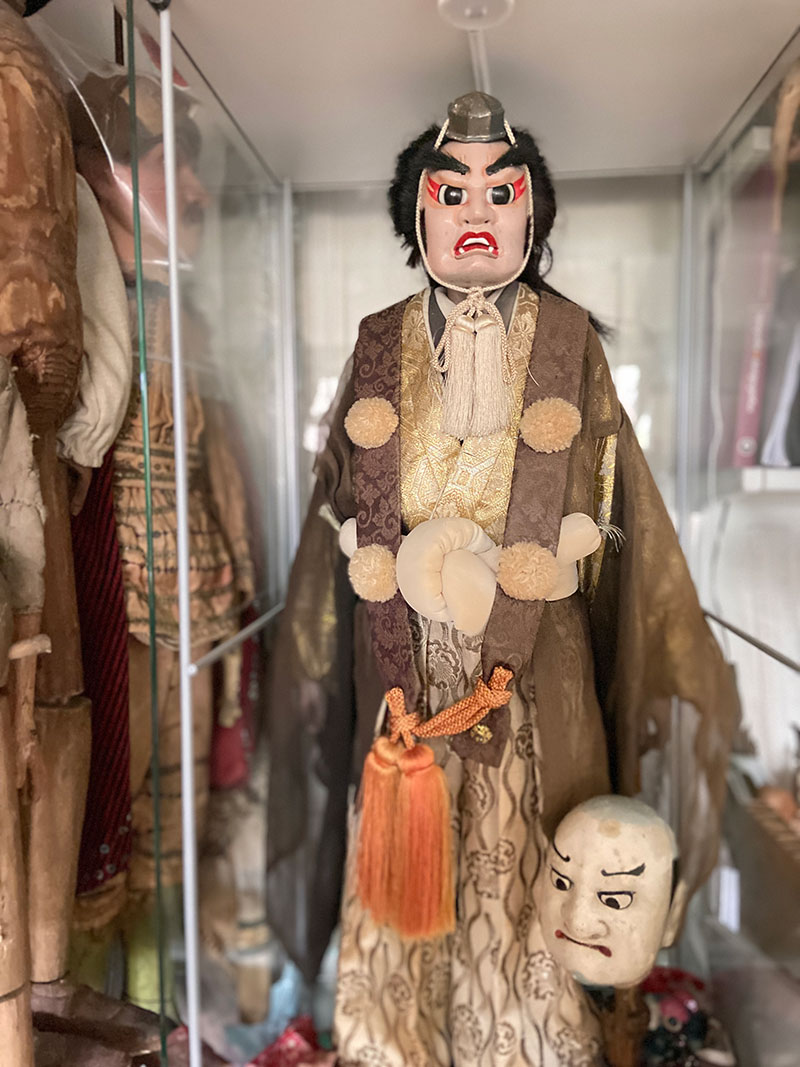
Marcus: Just in the beginning of 2020, I had the amazing opportunity to purchase a full body Japanese Bunraku puppet. I never thought I would be able to have such a treasure in my hands one day, but it happened! He is pictured here on the left. Most puppeteers cherish this highly respected form of puppetry that dates as far back as the 16th century in Japan. And when it comes to Steiff, I would love to add some of the rare and beautiful pre-war puppets that I’m still missing. An old Steiff Teddy Bear Puppet would be a dream come true!


Steiffgal: Thank you so much for sharing your knowledge and insights with the Steiff collecting community today! 

For more information on Marcus and his puppet passion, check out his website at https://onceuponapuppet.com.

Have a question about one of your Steiff treasures? Let's talk! Click here to learn more.

Sunday, September 27, 2020

A Vintage Steiff Picture Is Worth A Thousand Words!

What's old is new again when you recreate it using older Steiff friends! One thing Steiffgal has noticed, especially on really image-centric platforms like Instagram and Facebook, is that folks are "recreating" scenes from their childhood as adults - and often incorporating original props, backgrounds, or outfits. These are usually really fun, and cheerful, and show the effect of time on people, beloved artifacts, and settings. Here on the left you can see Steiffgal attempting to "recreate" a fantastic Steiff image she found online. This little girl is NOT Steiffgal, but they clearly share the love for fantastic vintage button-in-ear playthings. 

As Steiffgal was preparing for another Steiff project, she came across a charming company catalog from the late 1930s. This prewar brochure from her collection was printed in sepia tones and featured a number of utterly adorable product vignettes that really called to her - including this one of two farm friends and a cat-doll on a little stroll. So she thought... let's bring this to life again! You can see this vintage image here on the left. 

A picture is worth a thousand words - especially those featuring some of our most beloved vintage button in ear friends. Steiffgal has "recreated" this image using analogous items from her own collection; you can see this attempt here on the left. The calf is standing, unjointed, and made from white and light brown wool plush. He was produced in 14, 17, and 22 cm; Steiffgal's version is the 17 cm size. The lamb is standing, unjointed, and made from white wool plush with a "lumpy-bumpy" texture. He was made in 14, 17, 22, and 28 cm; Steiffgal's version is the 14 cm version. And the cat doll is standing, head jointed, and is available dressed in a number of different outfits. She was made in 22 and 28 cm; Steiffgal's version is the 22 cm version. 

It's always fun to use the information documented in vintage ephemera to learn a little bit more about the items being promoted. In this case, we can use the prices listed to figure out how much they would "cost" today. So, here's how each item noted was priced in 1938, and the approximate cost of each today in US dollars using an inflation calculator:

  • The 14 cm calf was 1.90 DM, which is about $14.01 in 2020.
  • The 17 cm calf was 2.50 DM, which is about $18.43 in 2020.
  • The 22 cm calf was 3.50 DM, which is about $28.81 in 2020.
  • The 14 cm lamb was 1.90 DM, which is about $14.01 in 2020.
  • The 17 cm lamb was 2.50 DM, which is about $18.43 in 2020.
  • The 22 cm lamb was 3.50 DM, which is about $28.81 in 2020.
  • The 28 cm lamb was 5.00 DM, which is about $36.87 in 2020.
  • The 22 cm cat doll was 2.50 DM, which is about $18.43 in 2020.
  • The 28 cm cat doll was 3.50 DM, which is about $28.81 in 2020.

Steiffgal hopes that this discussion on recreating vintage images has been a picture perfect experience for you!

Have a question about one of your Steiff treasures? Let's talk! Click here to learn more.

Sunday, May 31, 2020

Boys Will Be Boys When It Comes To Steiff's Max and Moritz Hand Puppets!

In the mood for a little merry mischief? Or perhaps some double trouble? Then this playful pair of puppets is just what the doctor ordered... as you can "take two and call me me in the morning!" Check out these brothers in arms from Steiff and see what makes them so fun, and interesting, from the historical and product development perspectives.

Boys will be boys when it comes to these fictional friends named Max and Moritz. Both are in the form of glove puppets with hollow bodies and softly stuffed heads. They are 30 cm tall and made from trevira velvet, a popular and durable fabric that was popular in the Steiff line in the c. 1970s-1990s timeframe. Their clothing is integral to their bodies. Max is wearing a brown shirt, tan pants, and a red jacket. His short, spiky black hair is made from plush. His round face comes to life with black button eyes, a rounded flat nose, pink highlighted cheeks, and a painted mouth, nostrils, and eyebrows.


Moritz is wearing a blue shirt and light tan pants. His long blonde hair, with a great cowlick in the front, is made from plush. His long, lean face comes to life with black button eyes, a distinctively pointed nose, pink highlighted cheeks, and a painted mouth, nostrils, and eyebrows. Both Max and Moritz retain all of their IDs, including their named chest tags, buttons, yellow tags, and hang tags. These character puppets appeared in the line in this size only from 1979-1982.


These perky puppets are based on the beloved German folk characters Max and Moritz, the "stars" of a book called Max and Moritz (A Story of 7 Boyish Pranks). It was written by author Wilhelm Busch (German, 1832-1908). This work was first published in 1865. This darkly comedic tale is written in verse and consists of seven “chapters.” The brothers are the ultimate troublemakers and they cast their shenanigans throughout their town. The book, still a favorite since its debut 155 years ago, has become an integral part of the German culture and psyche. Author Rudolph Dirks credits Max and Moritz as the inspiration behind his early and important comic strip The Katzenjammer Kids which debuted in 1897. And even today, some German parents are known to have named their twin sons after this devilish duo!


It’s no joke to say that Steiff “maxed out” in its production of Max and Moritz characters over time. The company produced both as full bodied dolls in 30 and 35 cm versions from 1910 through 1926. You can see these handsome dudes here on the left; the photo is from the Cieslik's Button In Ear The History of the Teddy Bear and His Friends. All were made from felt, fully jointed, and closely mirrored Busch’s original renditions, including the character’s distinctive faces, hairstyles, and body types. These dolls were featured prominently in the company's playful advertising photos of their era. Max and Moritz were also produced as 25 cm “record” or pull toy dolls on wooden wheels from 1916 through 1926 overall. Fast forward, Steiff produced Max and Moritz as tiny 10 cm rubber dolls from 1962 through 1967. These puppets under discussion today are the final appearance of Max and Moritz in the Steiff line as far as Steiffgal can tell.

Steiffgal hopes this discussion on Steiff's Max and Moritz hand puppets has added some comic relief to your day!

Have a question about one of your Steiff treasures? Let's talk! Click here to learn more.

Sunday, February 24, 2019

Having A Ball With This Charming and Early Steiff Woolen Miniature Rooster

Top of the 'morning to you! A rooster's call welcomes the new day. And this little rooster under discussion here is certain to MAKE your day! Check out this happy pre-war handful and see what makes him so delightful from the design and product development perspectives.

Bird's the word with this well-rounded woolen miniature rooster. He is head jointed and measures about 3.75 inches (or 9.5 cm) tall, including his comb, and about 4 inches (or about 10 cm) wide, including his tail. His body is made from green, yellow, tan, brown, blue, and yellow Nomotta wool threads. His two front pom pom "legs" are made from yellow Nomotta wool threads. His tail is made from green felt, while his comb is made from red felt. His happy, smiling beak is made from yellow felt. He has playful, black and white google style glass eyes. Rooster retains his short trailing "f" style button and bits of his yellow tag as his Steiff IDs on his tail feathers. This item was produced in this size (9 cm) from 1938-1942.  

Other similarly ball shaped barnyard bird buddies of rooster's era include an 8 cm duck produced from 1936-1941, an 8 cm chick produced from 1936-1941, and a 9 cm hen produced from 1938-1941. These birds are featured in the photo on the left in the top row. This image is from Steiff's 1938/1939 catalog. You can click on the catalog page to make it bigger. Which is your favorite? 

This woolen miniature rooster has article number "3509." This code translates to 3=sitting, 5=lamb's wool or wool plush, and 09= 9 cm. The 5 is somewhat confusing as it does not specifically call out the "yarn" characteristics of rooster's material. However, almost all of Steiff's prewar woolen miniatures have a 5 as their second article number digit, so it appears that the "5" does incorporate the Nomotta wool category. 

Rooster is also noted on the catalog page as weighing 15 grams. Steiffgal decided to fact check that by weighing her example... and indeed he does!

Woolen miniatures were an important part of the Steiff pre-war line from the early 1930's through the early 1940's. Birds and other pets - like rabbits, cats, dogs, and bugs - were well represented in the product mix. They were appealing, inexpensive to produce and purchase, addictively collectible, and marvelous companions for larger dolls, bears, and other animal friends. Despite their petite proportions, each had a distinct personality and a timeless charm. This probably explains why they are so adored, and collected, by enthusiasts today - nearly 90 years after their introduction! 

Steiffgal hopes that this discussion on this fine feathered friend has been a ball for you!

Have a question about one of your Steiff treasures? Let's talk! Click here to learn more.

Saturday, October 13, 2018

Oh, Shoot!

"Welcome to our world of toys!" When you think of those words, what comes to mind? F.A.O. Schwarz, of course! And the good news is that all Steiff, doll, and toy collectors will soon have the opportunity to hear that delightful tune again, as the store reopens for business on November 16th, 2018 in Rockefeller Center in New York City. It's the update we've all be waiting for, after tearfully saying goodbye to this world-class institution for what we all thought was forever in 2015. Do whatever you have to do... walk, take a car, bus, train, plane, or the subway to visit the new store when it debuts soon. Steiffgal is certain that you will experience "The Return to Wonder" the store promises! (The photo of a mini "pop up" F.A.O. Schwarz store shown above is from www.cnbc.com.)

As part of this grand opening celebration, Steiffgal (and her collection) had the pleasure of contributing to a short film that will be shown as part of the store's debut in a few weeks. The movie focuses on the remarkable legacy of the F.A.O. Schwarz company and the instrumental role the Schwarz family had in the world economy and business community from the mid-1800s onward. Here is a behind-the-scenes look at how a very long day of filming here at Steiffgal's house will help bring parts of that story to life.

After a week of frenetic planning, the crew from the Ewers Brothers film production company arrived on location around 9am. The team included a director, a producer, an assistant producer, a cinematographer, and an assistant cinematographer. All were fantastic, extremely professional, respectful of the collection and house, and just plain fun to be around. The team brought an enormous amount of movie-making items in hard cases, tubes, suitcases, rolls, and just about any packing case you can imagine. As the parking and traffic was crazy in Steiffgal's neighborhood at this time, load-in was a little complicated logistically, but everyone was in good humor and this task was accomplished within 30 minutes or so. Given the amount of materials they brought, these items took over much of Steiffgal's first floor, including the kitchen! 

Next, the crew toured the house to find the best place to "set up camp" for the interview sessions. They needed an area with an interesting background, the right light, and enough space to arrange what seemed like an infinite amount of technologies, a huge camera, multiple screens, and other filming apparatus. It was decided that this would take place in Steiffgal's living room, which is also the largest room in the house. Within an hour, this usually quiet space (which just that morning was where Steiffgal and family enjoyed a low-keyed breakfast and coffee) was transformed into what looked like an international broadcasting booth!

An important part of putting together a film like this is the inclusion of old photos, letters, catalogs, and other ephemeral things to round out the story and to ground it in history. Steiffgal, with the help of the Schwarz family and some wonderful and generous toy-colleagues, pulled together a table full of these items expressly for this purpose. The film team brought along an electronic scanner. The assistant producer studied these historical documents and scanned the ones that would be relevant and helpful to the project. It took her practically the entire day to complete this herculean task.

The main interview set took about two hours to arrange and finalize. This time was spent adjusting light levels, angles, volumes, noise controls, and other factors that all come together to make the ideal venue. Steiffgal was surprised when simple black metal chairs from her porch were selected as the interview seats, not the couch as she anticipated. All in all, the set from the interviewee's perspective consisted of two chairs facing each other, about two feet apart. The camera was behind one of the chairs. The person being interviewed faced the camera; the interviewer sat in the other chair and never appeared on camera. There were various lights, screens, and other apparatus all within that very small space. The producer held a device about the size of a tablet that allowed her to view what the camera saw and make adjustments as needed.

Overall, the crew interviewed three people during the day - two members of the F.A.O. Schwarz family and Steiffgal. Each interview took about an hour and was casual and very conversational. The interviewer had carefully prepared a slate of general questions for everyone, as well as specific questions per person. For example, family members were asked about their memories of the store and their relatives, what it was like to "grow up Schwarz," and the role of toys and play in their lives. Steiffgal was asked what the store means to collectors, why F.A.O. Schwarz editions are coveted even today, the role of the catalog, and all about Steiff's life-sized animals that are practically synonymous with the store. Because of street sounds and sirens, filming was occasionally put on hold until these noises passed. But for the most part, the hour long interview just flew by, and the interviewer did a masterful job at developing rapport and making his interviewees feel as comfortable - and sound as articulate - as possible! And, in case you were wondering, Steiffgal did indeed hold a special and meaningful Steiff animal in her arms during filming. So stay tuned about that!

Once the interviews were completed, the crew again rearranged the house for shooting "B" roll. These are shots or images that are used in the film between segments or as transitional visuals. It took at least another hour to set up the cameras and lights for this. The camera was positioned on a multi-wheeled dolly and could be fluidly and evenly moved to film panoramic images of the collection. The team was interested in capturing the size, scale, and variety of the studio pieces, as well as the beauty and range of Steiff animals that appeared on the shelves of F.A.O. Schwarz over the years. Steiffgal was delighted that Jocko chimps of all sizes and shapes, as well as a number of other collector's favorites, were prominently featured in the "B" roll shots. Here on the left you can see cinematographer Chris Ewers preparing a few familiar Steiff faces for filming.

The crew's final shooting location was the second floor of the house, including Steiffgal's study and her stairway landing, where a few cases of Steiff are on display. Many of the items from these areas have provenance to F.A.O Schwarz so it was important that these treasures were included in the filming. All of the movie making apparatus used for the "B" roll was brought into these small spaces and there was hardly any room to stand! But the crew did a masterful job in working around the limited footprint and truly brought the collection to life under their magic touch.

The full day of shooting wrapped up around 7pm. Everyone felt great about the quality and quantity of footage generated. The team quickly packed, bundled, and cased up all of their filmmaking tools and loaded up their vehicles. They also helped to reconfigure the house back to its original condition. Hugs and high fives were exchanged. Once the team left Steiffgal's home, there was no physical trace of the extraordinary things that had occurred in the space that day. But you can best believe that the wonderful memories of this once-in-a-lifetime experience will last forever!

Steiffgal's hopes that you enjoyed this sneak peak into some of the preparations going into the relaunch of the world's most favorite and beloved toy store in November, 2018. Steiffgal extends a huge thank you to the Ewers Brothers team for a job well done, and cannot recommend them highly enough for their professionalism, insight, humor, and just plain wonderfulness! Director Erik Ewers (here on the left, under the supervision of a Steiff Moorland sheep) and crew have recently completed a documentary on the Mayo Clinic, airing on PBS. You can read more about that by clicking here. For more information on F.A.O. Schwarz, please follow all the happenings and excitement at www.faoschwarz.com. Once this movie has been completed and launched, Steiffgal will share the link and post a copy here on the blog.

Have a question about one of your Steiff treasures? Let's talk! Click here to learn more!
The teddy bear search engine