Showing posts with label Jocko. Show all posts

Saturday, January 25, 2025

This Charly Purse Is A Crown Jewel In Steiff's Prewar Novelty Production

Hold everything and check out this absolutely amazing rarity!
Steiffgal has a thing for Steiff novelties, especially those made in the prewar era. And it is certainly the best of all worlds when it comes to this breathtaking example. This Charly the King Charles Spaniel handbag will undoubtably have your vote for “Best of Show” in terms of her beauty, design, and willingness to lend a paw in service!

What we have here is Steiff’s Charly Handtasche or Charly Purse.
 This novelty is based on Steiff's beloved and legacy Charly The King Charles Spaniel pattern which debuted in the late 1920s. This precious pooch purse is 25 cm long, in a standing (albeit slouchy) position, and head jointed. She is made from long and short mohair plush. Her ears and tail are brown-tipped mohair, while her body and face are off-white mohair which has mellowed to a vanilla color. Her face is detailed with oversized brown and black glass pupil eyes and a simple black hand embroidered nose and mouth. She also has black embroidered claws on her hands and feet. And here’s what makes her a purse: her torso is hollow like a pouch, and is lined in bright orange velvet. You can see that detail in the photo on the left.  Her back opening closes with a study brass zipper. The pouch volume is quite small; it probably is the volume of about a small sized apple. This fantastic and very rare prewar novelty was produced in 22 and 25 cm from 1927 through 1940.

Steiff debuted a series of zippered, mohair purses in 1927 based on some of their most beloved characters of the era.
These measured 17 to 29 cm in size, measured horizontally. Each featured a velvet or silk lined, hollow back pocket which closed with a zipper. The zipper had a mohair ring pull to it, which probably also was designed as a small handle. These rings tend to get lost to time or wear given their function. The first button-in-ear handbag designs to appear included this Charly, as well as Jocko the Chimp, Petsy the Baby Bear, Bully the Bulldog, and Molly the puppy. Other patterns rolled out over time, with the final design being a Pip in 1941. 

Now let's do a bit of time travel. Check out this image on the left from Steiff's 1929 catalog. You can click on the image to make it bigger. The page is dedicated to their line of mohair handbags. Three young ladies are happily modeling the purses, including one with the Charly bag under discussion here today. Steiffgal thinks she looks the happiest of the gals, and for good reason! You can also see the circular mohair zipper pulls on the purses. The words on the advertisement translate roughly to, "Elegant in the arm of the lady, funny with the little ones.” The catalog page also notes that the purses were decorated with a collar or silken ribbon. 

Steiffgal hopes this discussion on Steiff's animal handbags has got you carried away - in the best possible way!

Have a question about one of your Steiff treasures? Let's talk! Click here to learn more.

Monday, January 13, 2025

Picturing The Possible Design Origins Of Steiff's Beloved Jocko Chimpanzee

Steiffgal was working a project for one of her auction house clients and came across this charming image. Well, actually it came to her... probably because Steiff is usually in her head at any given time!

Image from Potter & Potter Auctions
What we have here is a 28 x 37-¼" printed broadside from around 1913. It was published in Hamburg, Germany by Adolph Friedländer, a man who ran a lithography company that produced over 9,000 posters between 1872 and 1935. Most of these were for performers and traveling acts, including magicians and circus and vaudeville performers. The words on the poster read Every Evening / Jeden Abend / Tous Les Soirs, and it is illustrated with a performing chimpanzee in four vignettes: modeling a tuxedo and top hat with a cane and cigarette; tossing a barrel over his head; riding a bicycle down a flight of stairs; and walking on stilts. The three languages on the poster suggest that this primate performance was international, or at least appeared in the UK, Germany, and France. This item is lot #256 at Potter & Potter Auctions' February 1, 2025 Wunderkammer sale, and is estimated at $2,000-3,000.   

Image from Zwiggelaarauctions.nl

So what is the possible connection to Steiff here? It is interesting to note that starting around 1910 or so, trained, performing chimpanzees were the darlings of the entertainment world. They appeared in circuses, in sideshow and venue acts, and in publicity photos and postcards - usually dressed in scaled human clothing. Steiff has always been aware of current events, media trends, and popular culture as inspirations for new product design. This started around 1904 or so, when the company produced a licensed version of Peter Rabbit - who at the time was making headlines in the children's literature world. Other history/cultural/celebrity productions of basically the same era included a series of dolls based on the Happy Hooligans comic strip; Caesar, the King's dog; and Tige (Buster Brown's dog), among many others. 

Primates have appeared in several forms in the Steiff line since the company's catalog debut in 1894. However, in 1909, Steiff introduced its most realistic, lifelike, and appealing brown mohair chimpanzee. Coincidence or not?

Image from Steiff's 1913 catalog

This fully jointed primate pattern - which would "officially" be named Jocko in 1929 - had authentic body and limb proportions and lifelike felt hands, feet, and facial features. Medium sized Jockos onward sported a white mohair chin and featured felt eye pockets. This ocular detailing meant that their brown and black glass pupil eyes were surrounded by raised felt eyelids. Brown mohair Jocko was produced in 15 sizes, ranging from 10 to 90 cm, from 1909 through 1943 overall.  

Image from Zwiggelaarauctions.nl

Bringing this discussion full circle, Steiffgal found an almost identical version of this poster, except that it had the words "The great consul Patsy" written in large letters across the bottom. She could not discover additional details on Patsy, but infers that the chimp pictured may have been named Patsy. Patsy was a popular boy's name in the early 1900s, and derives from a Latin word meaning “noble,” “nobleman,” or “patrician.” It is intriguing to think that someone from Steiff may have seen this poster, or performance, or one like it, and decided that it was time to elevate the company's chimp design to match the popular aesthetic of the time. And collectors more than a century onward are thanking them for this really wise choice!

Steiffgal hopes this discussion on Jocko's possible design origins has been a feast for your eyes!

Have a question about one of your Steiff treasures? Let's talk! Click here to learn more.

Sunday, November 26, 2023

Can Steiff's Jocko Chimps of Yesteryear Speak French?

Given how adorable and appealing Steiff's dolls, bears, and animals are, it is no surprise that antique advertising featuring these photogenic superstars can be as collectible as the items themselves. Early Steiff catalogs, mailers, and advertisements give unique insights into the design and marketing priorities of the company over time. They can also provide interesting metrics like prices, weights, and minimum orders, and even company or distributors' names, addresses, and contact information.

Check out this amazing piece of ephemera featuring Steiff's legacy Jocko chimpanzees.
There is much to learn from this simple 3" x 5" card. This all original example was produced around 1912 for Steiff's business partner in Paris. The front of this double sided, cardboard card shows a full color image of six Jockos playing in a miniature bedroom. The space is furnished with three wooden chairs and a bed. There is also a framed and matted picture on the wall. Three Jockos don turn of last century style dresses detailed with pleated fronts and decorative embroidery. Two others wear blue playsuits with white trim. And one is just simply in his birthday suit. The Jocko on the far right seems upset, and her friend just to her left appears worried about that. Steiff always had a great way of capturing these emotional subtleties in their early images. You can also see Steiff branding on the top left side of the image. The vignette is simply irresistible.


The back of this time capsule is equally as interesting, but for different reasons. It has a simply rendered map of turn of last century Paris, with a red square indicating the location of the Steiff distributorship at 23 Rue des Petites-Hotels. The words on the card summarize as: "Fabric Toy Factory, Margarete Steiff, located at 23 Rue des Petits Hotels in Paris with the head office in Giengen on the Brenz River in Germany. Offering toys and animals, dolls, kites, and pincushions made from felt, plush, velvet, etc. Winner of the grand prize at the World's fairs in Saint Louis in 1904 and Brussels in 1910."

The actual intended purpose of this card is not clear. It doesn't have a space for an address or stamp, so it could not be mailed like a postcard as we know them today. And it is a little large for a standard business card. It might have been put in an envelope as a mailer, or it could have been handed out at a trade show or exhibition as a mini brochure. The map on the back suggests that the location may have been hard to find, and/or that the location encouraged visitors.


A simple google search finds that today, 23 Rue des Petites-Hotels in Paris is occupied in part by the Al Dente Agency. According to their website, Al Dente describes itself as: “We are an integrated creative agency based in Paris and Rome, believing in the cultural aura of luxury brands.” Perhaps its principals could feel the Steiff love - and aura - when they considered this location for their business in the City of Lights? Above you can see what the street looks like today from the on-the-ground perspective; the image is from Wikipedia.org.

Steiffgal hopes this discussion on this Jocko card has given you a little insight into the company's turn of last century monkey business.

Have a question about one of your Steiff treasures? Let's talk! Click here to learn more.

Thursday, August 11, 2022

This Steiff Primate Makes For One Fantastic Tale Of A Tail!

Now we are truly on a roll!
Steiffgal recently returned from a trip to St. Louis, MO to celebrate all things dolls, bears, and toys at the 2022 United Federation of Doll Clubs annual event. The salesroom associated with this gathering always has some of the finest Steiff temptations on offer - and this year did not disappoint! Check out this charming and unusual Steiff primate on wheels Steiffgal found on opening night of the festivities. You'd have to agree - he makes for one heck of a souvenir!

This handsome and unusual prewar Steiff sweetie pull toy is "officially" named Record Peter. He is 18 cm and fully jointed. He is made from white mohair. His hands, feet, face, and ears are made from tan colored felt. His pensive face comes to life with green and black glass pupil eyes, a seamed mouth, and light purple-ish and pink colored airbrushed highlights on his nose area and forehead. He rides upon a black metal, four-wheeled cart. The centered wheels are solid wood and painted red. When Record Peter is pulled along, his arms and legs move back and forth vigorously, giving the appearance that he’s working hard to keep his cart moving. When he left the factory in Giengen, Germany about a century ago, he had a pull cord attached to the front of his vehicle. Record Peter retains his long trailing "f" button and traces of his white ear tag as his Steiff IDs.

Prewar, Record Peter appeared in the standard Steiff catalog in 10, 15, 20, 25, and 30 cm in deep chocolate brown from 1913-1943 and in white in 18 cm from 1925-1934. He was also produced in a few other "surreal" colors, including blue, yellow, green, red, and black! These hues are so incredibly rare that Steiffgal has only seen photos of them. Given this Peter's ID configuration, it is Steiffgal's best thinking that he was "born" in the very beginning of his manufacturing time frame.

Now let's take a step back and look at one of the features that makes this Record Peter so unusual - in addition to his white mohair. If you study his rear end (and its ok to stare in this case) you will notice he has a tail. Unlike many other standard line tail-less primates produced by Steiff, this model indeed has a long, thin mohair tail. This appendage probably was challenging to manufacture, given its size and shape.

Here on the left, you can see the 1929 catalog page advertising some of the company's primate line for the year.
 You can click on the image to make it bigger. This page has a subtle bit of information that adds some insight to the tail issue. Here, items noted as product category "9" are chimpanzees, while items noted as product category "10" are monkeys or Record Peter items. From the scientific perspective, chimps, gorillas, and orangutans do not have tails – classifying them as "apes." Those primates with a tail are classified as "monkeys." That is why the tail-less brown mohair "Jocko" pattern we know and love is considered a "9". However, it is curious that a white, freestanding mohair primate with a tail on this page is classified as a "9," suggesting it should NOT have a tail. Perhaps something here got lost in translation?

On the way bottom on the right of the catalog page, you can spot the white primate on wheels under discussion today.
 A close-up of him is here on the left. 
You can click on the image to make it bigger. The copy reads, "Record-Peter, Speedaway movement of amusing effect. No clockwork or mechanism to get out of order, simply pull cord. Strong colored wire frame, varnished wood wheels, voice, each in a box." He is also noted as product number 10/318 (10 = a Record Peter, 3 = sitting, and 18 = size in cm); that he weighs .31 kilograms (which was important for shipping and logistics) and that he was packed one to a box.

Steiffgal hopes you've enjoyed this tale of a tail detective story!

Have a question about one of your Steiff treasures? Let's talk! Click here to learn more!

Sunday, April 10, 2022

Monkey See Monkey Do With This Delightful Steiff Prewar Rarity

It's no secret that Steiffgal is simply bananas over Steiff's legacy Jocko the chimp pattern. This happy go lucky primate has been a collector's favorite since its introduction in 1909 - and for good reason! Steiffgal saw today's featured guest listed on an online auction platform in Europe and knew she had to have him. After a few ups and downs, he finally arrived in the USA and was even better than photographed and described. Take a look at this ray of sunshine - literally!

Here's a tip - this Jocko is off the charts great! He measure 30 cm sitting and is fully jointed. He has the design's traditional very long arms and bended at the knee legs. His hands, feet, face, and ears are made from felt. He comes to life with oversized brown and black glass pupil eyes set in eye pocket, a large, open, felt lined mouth, painted features and nostrils, and a white mohair chin. And you can't help but notice his outstanding fabric. He is made from bright orange tipped mohair. This coloration is very prominent on his body and joints and less so on his head and arms. His fading probably happened because of exposure to sunlight, as well as natural fading that occurs with dyes and natural fibers. It is also possible that his torso is less faded because he was wearing clothing that protected these areas from the elements. Only he knows for sure!

Jolly Jocko retains his long trailing "f" button and traces of his yellow ear tag as his Steiff IDs. This is helpful, somewhat, in dating him. The long trailing "f" button appeared from around 1906-1935, and the prewar yellow ear tag appeared around 1934. If you overlay those two data points, they suggest that orange tipped Jocko was most likely "born" in 1934 or 1935.

Colorfully tipped mohair was a prominent design feature starting in the mid-1920s through the early to mid 1930s. Some models of Happy, Teddy Clown, and Petsy featured eye-catching brown tipped mohair. Fluffy the cat is famous for her teal eyes and blue-purple tipped coat, while Bully the bulldog made a name for himself with his orange tipped detailing. Molly the puppy was produced with brown, red, green, or blue tipped mohair, and examples of Charly the King Charles Spaniel with bright orange tipped mohair appear occasionally on the secondary market. Some 1920s rabbits were produced in surreal, tipped hues. and even some field and forest animals sported this distinctive fabric as well.

As far as Steiffgal can see, there is no specific mention of an orange tipped Jocko in any of the standard Steiff reference books. All of his IDs and detailing put him in at the tail end of "the golden age of tipping" at Steiff. However, Jocko monkeys are among the most popular and prolific designs in the Steiff line. Given they've been in production since practically the turn of last century, it would be nearly impossible to capture all of his different versions and variations - especially all the different fabrics he's sported over the years. For example, in her own personal collection, Steiffgal has otherwise undocumented versions of this chimp in artificial silk plush, wool plush, cotton plush, and other woolen combinations - among others! It would be possible to have a collection of just Steiff Jocko monkeys given the enormous range of their appeal, individual personalities, and of course, material presentation.

Orange you glad you checked out this Steiff blog today?

Have a question about one of your Steiff treasures? Let's talk! Click here to learn more.

Tuesday, May 25, 2021

Playing The Dating Game With Steiff's Precious Pre- And Post War Chimp Puppets

How do you tell how old a vintage Steiff collectible is, if it doesn't have tell-tale IDs? For Steiff items produced over a very limited time, this is easy, and can be solved through reference book or online research. However, for some legacy items that appeared in the line for decades, this can be tricky. Dating is an art, and not a science, especially when it comes to timeless items like the company's Jocko chimpanzee puppets. 

Steiff's chimp puppets have been produced almost continuously in mohair from 1911 through 1978 (with a pause in the 1940s for World War II) and are beloved universally.
Steiff's monkey puppet design was produced prewar from 1911-1943. He was called Punch Chimpanzee through 1928 and Jocko from 1929 onward. Greater variants of this puppet were produced prewar than postwar. Prewar, they were made in 17 cm in brown, blonde, and white mohair. Brown was the most popular and prolific color and appeared from 1911-1943. A larger, 28 cm brown mohair version was produced from 1912-1916. The blonde version is super rare and was produced only from 1913-1916. And the white version appeared in the line from 1925-1928 - probably coinciding with the popularity of John Galsworthy’s 1925 best-selling book, “The White Monkey." A sweet 17 cm prewar brown mohair chimp puppet is pictured here on the left. 
 
Steiffgal has also seen prewar Jocko puppets with the traditional mohair head and felt hands, but with a red felt or purple felt body. These were probably made to match the "colorful" aesthetic of their production time - 1921 through 1942. These are relatively rare and seldom seen on the secondary market. You check out these fun novelties here on the left, the photo is LiveAuctioneers. Steiffgal also knows of a few other examples of these felt and mohair puppets, including one that has a blue felt body.

The Jocko puppet was also a mainstay in the postwar Steiff product line through 1978.
He was produced in brown artificial silk plush in early 1949, and then again in brown mohair starting later in 1949 onward. Like the popular, standard line prewar version, he measured 17 cm and basically shared the same general detailing as his earlier ancestors. A sweet 17 cm postwar brown mohair chimp puppet is pictured here on the left. 


So how do you date a Steiff chimp puppet sans IDs? There is no one simple answer here, and every expert probably has their own set of criteria and ways of thinking about this. Steiffgal personally can think of four subtle differences that are distinctive between older versions and more recent ones. They are:

1. Finger tube. As far as Steiffgal can tell, prewar chimp puppets have a cardboard finger tube, while postwar ones have a plastic one.

2. Eyes. For the most part, Steiff used glass pupil eyes on these puppets through the early 1960s; by the end of the 1960s these were almost entirely replaced by plastic ones for health and safety reasons.

3. Fabrics. Steiff produced these monkey puppets in a number of mohair and felt colors prewar, but only in brown postwar. Steiffgal has noticed that occasionally the brown mohair on the prewar versions feels or looks a little different than "traditional" mohair. By that she means it is a bit lighter or darker in color, or has a slightly different touch or feel to it. This may be because of wartime-related production limitations or supply chain issues.

4. Appearance.
Steiffgal has noticed that the prewar versions in her collection have a more "delicate" presence to them than do the post war versions. The prewar ones tend to have longer, leaner heads with more angular felt masks; the postwar ones are a bit more rounded and childlike, with curvy felt masks. The prewar ones have gentle, nuanced painting and shading on the face and ears, while the postwar ones have darker, more prominent shading. The prewar ones have larger, almond shaped eye pockets while the postwar ones have smaller, more circular ones. And for the most part, the prewar versions have their button on the outside of their ears, and the postwar ones have their button on the inside of their ears. Here on the left you can see a closeup on the faces of a prewar Jocko puppet (on the left) and a postwar Jocko puppet (on the right) for comparison. 

Steiffgal hopes this discussion on pre- vs. postwar Jocko hand puppets has been more fun than a barrel full of monkeys. 

Many thanks to Marcus Sampaio of Once Upon A Puppet for his contributions to this article!

Have a question about one of your Steiff treasures? Let's talk! Click here to learn more!

Saturday, December 12, 2020

Putting On A Show Of Support For Steiff's Fantastic And Early Handpuppets!

Hands in the air if you love Steiff puppets!
These great novelties are universally treasured by Steiff, toy, and puppet collectors, and are a great cross-collectible. Although the first Steiff catalog was produced in 1892, hand puppets did not appear in these publications until 1911. However, the designs for a puppet bear, cat, and dog had all been registered in a German patent office since 1909. Through pure serendipity - in the best possible way- Steiffgal recently met an amazing collector with a passion for Steiff's puppets, especially the company's pre-war rarities. Come learn more about puppets and what makes Steiff's puppets so spectacular from the perspective of a lifelong puppet enthusiast.

Steiffgal: Please tell us your name, where you live, and what you collect.

Marcus Sampaio: My name is Marcus Sampaio. I was born in Salvador, the birth city of Brazil. In 2009 I immigrated to Canada and since then I’ve been living in Toronto, an amazing multicultural city. I’m a passionate collector of all sorts of puppets from different parts of the world.

Steiffgal: How did you get interested in puppets? Please describe your puppet collection, and how you store or display it.

Marcus: Puppets have always fascinated me since I was a little kid. All the great memories of attending marionette shows and playing with hand puppets — fostered by my parents during my childhood — led me to a side career as a puppet performer and theatre producer of A RODA puppet Company

My collection is very broad. I have Shadow Puppets made of animal hide, Wooden Marionettes (also called string puppets), Rod Puppets and, of course, the beloved and most known Hand Puppets! Some were once used professionally but many are well loved old toys.

Steiff stole my heart at the very first moment I saw a Jocko puppet. Today I have quite a large collection of these adorable Steiff critters and a soft spot for monkeys. Within the plush world, I also have puppets by interesting manufacturers like Schuco, Kersa, Eduard Cramer, Hermann Teddy, Grisly, Clemens, Anker, Invicta, SAF, Alpha Farnell, Hamiro and the list goes on…

I live in a condo and I don’t have much display space available. So most of my puppets are stored away, sadly! I use a barrister bookcase to display my favourite plush puppets. Some other special ones keep popping out of the trunks and hanging around the house.

Steiffgal: Do you actually use the puppets as puppets in performances? Or are they more like fine collectibles that are appreciated for their beauty, aesthetics, and rarity?

Marcus: I used to perform with the wooden puppets created by my artistic partner Olga Gomez, within the context of our puppet company A RODA in Brazil. The wooden puppet on the left is from A RODA's show "Love and Madness." Currently I collect puppets for their beauty, craftsmanship and also to preserve such an important part of the culture they come from. People would be amazed to know that pretty much every corner of the world has a form of puppetry.

Steiffgal: What about Steiff brand puppets particularly catches your eye?

Marcus: Steiff is truly an amazing brand! The attention to detail, craftsmanship and understanding of how toys are used, impress me. They are not only incredibly beautiful but they also function very well technically, as puppets. Their designs are so well thought out. Just as an example, if you take a close look at the back of a mid-century Steiff hand puppet, you will notice that it is slightly wider than its front. This pattern fits the puppeteer’s hand very nicely and even gives the puppet a nicer shape. 

Steiff is also very consistent in their production. Once I had 2 Dally Dalmatian hand puppets and decided to compare their black dots. I was amazed to see that they were identical but at the same time, their expressions were slightly different, as if they had different souls. I don’t see this design consistency and attention to detail very often when it comes to toy puppets.

Steiffgal: What are the top three favorite puppets in your collection, and why?

Marcus: Wow, that’s a tough one! My collection is so wide and the puppets that I have are so different in styles, origin and materials that it is hard to compare and pick one. But I can say that some pre-war Steiff Jockos are among my favourite plush puppets, probably due to my early memories of a play with a monkey puppet climbing a coconut tree. One named Blondie is pictured here on the left. My other two favourites are a late 19th Century Czech marionette of a noble man with a moustache and a full body Japanese Bunraku puppet.

Steiffgal: And finally, what is the holy grail you would like to find to add to your puppet collection? 

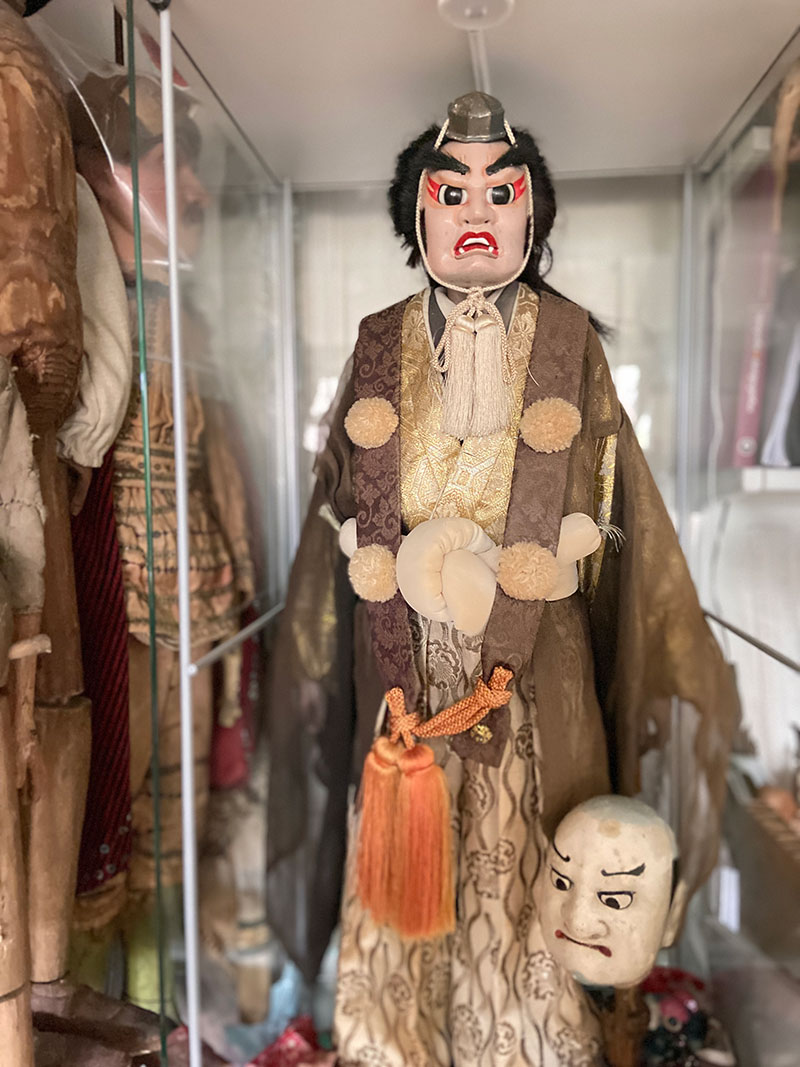
Marcus: Just in the beginning of 2020, I had the amazing opportunity to purchase a full body Japanese Bunraku puppet. I never thought I would be able to have such a treasure in my hands one day, but it happened! He is pictured here on the left. Most puppeteers cherish this highly respected form of puppetry that dates as far back as the 16th century in Japan. And when it comes to Steiff, I would love to add some of the rare and beautiful pre-war puppets that I’m still missing. An old Steiff Teddy Bear Puppet would be a dream come true!


Steiffgal: Thank you so much for sharing your knowledge and insights with the Steiff collecting community today! 

For more information on Marcus and his puppet passion, check out his website at https://onceuponapuppet.com.

Have a question about one of your Steiff treasures? Let's talk! Click here to learn more.

Saturday, June 13, 2020

These Steiff Auction Apes Are More Fun Than A Barrel Full of Monkeys!

It's no secret that Steiffgal is just bananas over Steiff's monkeys from any era. So she was thrilled to see a number of important ones coming up for sale at Potter & Potter's Eclectible Collectible Auction to be held on June 20, 2020. This event features over 120 lots of super sweet Steiff finds, including a ton of prototypes, one-of-a-kinds, hand samples, and unproduced items. So without further ado, let's monkey around a bit and check out some of these premier primates.

It's all fun and games when it comes to this first marvelous monkey. It is lot #90 and cataloged as: "Steiff Jocko Football Player [FAO Schwarz Exclusive]. 1970s. Mohair Jocko in a football uniform, issued exclusively through FAO Schwarz in the early 1970s. 11”. No tags. Uncommon." This athletic ape is estimated at $80-150.  Jocko looks to be in fine shape but is missing his original felt football helmet. This often happens over time when an accessory is not sewn onto an item. The rest of his outfit appears to be in fine condition. And how can you resist his "wild and crazy" blue dralon jersey? Jocko as a football player would be a great fit for a monkey, football, F.A.O. Schwarz, or "wacky 70's" collection.  

Given his time in the line (over a century!) and his global appeal, Jocko has been created in many different materials, forms, and novelties over time. Steiff and F.A.O. Schwarz began their partnership in 1906. Early post World War II, Steiff began creating a series of exclusive products for F.A.O. Schwarz. Some were entirely novel, while others - like this Jocko -  were tweaks and modifications of existing standard line items. Football playing Jocko appeared in the line from 1972-1973 and is considered relatively rare on the secondary market. He is pictured here on the left how he looked when he left the factory in Giengen almost 50 years ago; the image is from Pfeiffer's 1947-2003 Sortiment. 

Steiffgal's willing to go out on a limb for her next primate pick. Here we have Steiff's replica 1903 monkey with extraordinarily long arms and legs. It is lot #85 and cataloged as: "Steiff Monkey 1903 Replica Limited Edition. 2004. From an edition of 1,000. White tag. Brown distressed mohair, felt paws and face. Height 24”. Joints a little tender." This tall drink of water is estimated at $125-250. He has a marvelous, old fashioned look to him, including charming, oversized felt hands and feet. Given his scale and personality, he would be a great focal point for any room needing a little monkeyshines.

This design is a key one in Steiff's product development timeline. In his cataloging, this early ape is described as having "tender joints." Given he is string jointed, it is Steiffgal's suspicion that his joints are a bit wobbly, as they would be in a string jointed item. Steiff's first jointed animals were jointed with string. As you can imagine, these sorts of joints were not durable and broke easily, rendering the toys practically useless. Lot #17, a replica PB55, is another example an early Steiff string jointed animal.  Steiff next experimented with rod jointing. However, this metal infrastructure added a lot of weight - and alot of "uncuddliness" to items. Rod jointed items appeared in the line from c. 1904-1905. Lot #26, a replica 1904 bear, is a nice example of a rod jointed Steiff bear.  Then from c. 1905 onward, Steiff used a cardboard disk and metal pin jointing system, which is still part of production today. You can see the original 1903 string jointed monkey "dancing" with Steiff's original string jointed Teddy bear from company's turn of last century catalog page pictured above; the image is from the Cieslik's Button In Ear The History of the Teddy Bear and His Friends. 

And the eyes have it with Steiffgal's third monkey auction highlight. Here we have Steiff's Mimocculo orangutan replica. It is lot #86 and cataloged as: "Steiff Mimocculo 1930 Replica Limited Edition. 1998. Number 111 of an edition of 3,000. Features a squeaker, moving eyes, rust mohair, jointed arms and legs. Height 13”. He is estimated at $125-250. This irresistible and quirky monkey is quite the looker - from his fantastically colored mohair to his incredibly detailed felt facial mask.

Marvelous Mimocculo has both looks and brains... and is also a feat of precise engineering. What makes both the original and replica Mimocculos so unique are their moving eye features. When you pull on his ear, his glass eyeballs move left and right, as well as up and down! The Mimocculo pattern was originally produced from 1930 through 1936 in 8, 10, 12, 14, 17, 22, 25, 28, 35, 43, and 50 cm; sizes from 17 cm had the distinctive rolling eye mechanism. In 2016, Ladenburger Spielzeugauktion sold a working version of eye rolling Mimocculo for close to $7,400! He is pictured here on the left; the photo is from www.liveauctioneers.com. In the early 1930s, one of Steiff's business development strategies was to produce very high end mechanical novelties, and this is a perfect example of that. So as they say, here's looking at you kid... literally!

Steiffgal hopes this discussion on some of Potter's June 20, 2020 Steiff primate sale highlights has been more fun than a barrel full of monkeys!  You can learn more about this sale and check out the entire catalog by clicking here.

Have a question about one of your Steiff treasures? Let's talk! Click here to learn more.

Friday, November 22, 2019

When It Comes To Steiff, Variety Is The Spice Of Life

Given that Thanksgiving is just around the corner, how about spicing things up around here, too... Steiff style! Steiffgal was recently in London at the fantastic 200 Years of Childhood weekend. This grand multi-day affair featured a gala dinner as well as antique toy related lectures and a breathtaking salesroom. Steiffgal spotted this happy handful out of the corner of her eye, and it was love at first sight. Now he's crossed the pond with her and happily living amongst lots of new Steiff friends. Check out this sweet boy and see what makes him such a treat for all the senses.

Here we have a most unusual prewar Steiff Jocko on wheels; this design is also "officially" named Record Peter. This example is 20 cm and fully jointed. He is made from mohair and his hands, feet, face, and ears are made from tan colored felt. Jocko's gentle face comes to life with brown and black glass pupil eyes, a seamed mouth, and light airbrushed highlights on his nose area and forehead. He rides upon a black metal, four-wheeled cart. The centered wheels are solid wood and painted red. When Record Peter is pulled, his arms and legs move back and forth vigorously, giving the appearance that he’s working hard to keep his cart moving. When he left the factory in Giengen, Germany nearly a century ago, he had a pull cord attached to the front of his vehicle.

Prewar, Record Peter appeared in the standard Steiff catalog in 10, 15, 20, 25, and 30 cm in deep chocolate brown from 1913-1943 and in white in 18 cm from 1925-1934. He was also produced in blue, yellow, green, red, or black mohair in 20 or 25 cm from 1913-1917 overall. However, these specific jewel toned examples are EXTRAORDINARILY rare. Steiffgal knows of only one on the entire planet! But returning to Earth... you can see a close up of this Jocko's face and distinctive coloration here on the left.

There are two factors that make today's ape-on-the-go the wheel deal. The first, of course, is his awesome hue. He's made from cinnamon mohair. Cinnamon is not a standard mohair color when it comes to Steiff's Jocko, monkey, or ape production, wheeled or otherwise. However, once in a blue moon cinnamon examples turn up and they can be of great interest to collectors given their rarity.  In January, 2019 Vectis Auctions sold a very appealing, 28 cm fully jointed cinnamon mohair Jocko in fine condition for 2,900 GBP. This beautiful boy is pictured here on the left.

The second is his proportions. The vast majority of mohair Record Peters that Steiffgal has seen or handled have been the 25 cm size. This is probably the case as the 25 cm versions were made both pre and post war. Steiffgal has never personally handled a 10 or 15 cm Record Peter, ever (but would welcome the opportunity to do so!) Those smaller than 25 cm are just really, really rare overall. 

Rolling onward, how does this 20 cm cinnamon fellow under discussion today compare to the brown mohair 25 cm Record Peter most of us know and love? In terms of the drivers, the 25 cm and 20 cm Jocko chimps have several key design differences. For example, the 25 cm versions have dimensional ears, eyes in eye pockets, and a white mohair chin, while the 20 cm versions have simple felt ears, no eye pockets, and a felt chin. And in terms of their carts, 25 cm Jocko's cart measures 22 cm wide with 8 cm diameter wheels, and 20 cm Jocko's cart measures 18 cm wide with 6 cm diameter wheels. You can see these two Sunday drivers pictured side by side here on the left. 

Steiffgal hopes this discussion on this cinnamon Record Peter has been a savory delight for you. 

Have a question about one of your Steiff treasures? Let's talk! Click here to learn more.

Sunday, August 4, 2019

Things Are Twice As Nice With This Spectacular Steiff Pull Toy!


It's been a few weeks since Steiffgal's been able to share a new surprise with you; she's been traveling and just didn't have a moment to write. In a round-about sort of way, this post should make up for all of that!

Today's highlight is nothing short of the wheel-deal! Steiffgal won this precious pull toy at an auction in early July, and it recently arrived at her home "across the pond." Here we have a Steiff "Roly Droly." The baby Jocko is 10 cm, fully jointed, and made from brown mohair which has mellowed to a caramel color. He has a felt face, as well as felt feet, hands, and ears. He retains his long trailing "f" button in his foot. His sidekick is a standing, unjointed bear made from brown mohair. He is a "circus bear" given his nose ring and chain. His tiny face comes to life with glass pupil eyes and a black hand embroidered nose and mouth. He also retains his long trailing "f" 
button in his ear. 

Now let's check out their ride. These seatmates are each perched on a 8 cm in diameter yellow wooden disk. The bear holds onto a green wooden pole, and the monkey holds onto a red wooden pole. Each disk turns as the cart is pulled along. The chassis is made from metal and is green; it rides upon three red wooden wheels. The wagon itself is about 18 cm wide overall and has a red and white pull cord. The handle of the pull cord is red wood; when it was new, it had a Steiff button on the tip as decoration.

And just what makes this item a fifth-gear find? Roly Drolys are really, really rare, and for good reason. Unlike other types of Steiff treasures, these were specifically made and designed as hands-on play toys. And toys - especially with moving parts or designed for rough play - wear out, fall apart, or just get lost to time. For example, think about Steiff skittles. Those were designed as a sporting game, so losses and wear on skittle pins and balls are almost expected! This Roly Droly absolutely shows playwear, and even a little restoration. But given one makes an appearance every blue moon or so... it still is quite the bucket list score. Another example of a Roly Droly, this one with two little yellow mohair chicks as riders, is pictured to the left. 

Here's a bit more about this ingenious design. Roly Drolys are excellent examples of Steiff's prewar creativity. They were developed as a result of a mandate from Richard Steiff in the early 1920s to create more interesting, innovative, and novel items for the line. Roly Drolys get their name from the the German words "rollen" (to roll) and "drollig" (funny or droll). They appeared in the Steiff line from 1924 - 1934. These rotating pull toys were made with a variety of riders, including two chicks, two bears, a chick and rabbit, a dog and a cat, and two rabbits, among others. Other "wheeled wonders" of that era included "Wiwags," which appeared in the line from 1924 – 1927 and see-sawed up and down, and "Galop" toys which appeared in the line from 1926 – 1929 and moved back and forth. The catalog page from the mid-1920s featuring Roly Drolys is pictured here on the left. It is from Carsten Esser's 1920-1929 Steiff Kataloge. You can click on the image to make it easier to view and read. 

Steiffgal hopes you found this discussion on Steiff Roly Drolys really headspinning, but in the best possible way. 

Have a question about one of your Steiff treasures? Let's talk! Click here to learn more!

Saturday, July 6, 2019

This Unusual Steiff Cotton Plush Jocko Is More Fun Than A Barrel Full Of Monkeys!

No monkeyshines! This week's Steiff special guest is truly a top banana. It's no secret that Steiffgal is crazy for Steiff's Jockos, especially examples from the first half of the 20th century. Check out this really cool, and really unusual chimp-champ and see what makes him so interesting from the design and historical perspectives.

This marvelous monkey is sitting, measures 11 inches or 28 cm tall, and is fully jointed. His face, ears, hands, and feet are made from peach colored felt. His face is detailed with an open, felt lined mouth, brown and black glass pupil eyes set into expressive, dimensional eye pockets, a once-white mohair chin, and airbrushed highlights around his eyes, nose, and mouth. His body is made from a light brown - almost khaki colored - cotton plush material. He retains his short trailing "f" Steiff button, broadly dating him from the c. 1936 - 1950 time frame. Steiffgal suspects, given his materials, presentation, and ID, that this Jocko was probably made around 1948 or 1949.

It's easy to have a plush crush on Steiff rarities made from unusual materials. Cotton plush has both a cotton backing and a cotton pile. The best way to describe it is that it feels like a cotton bathroom towel that has been through a number of wash and dry cycles; a little bumpy in texture but with an overall and somewhat smooth feel and dull finish. It is not like mohair, which can be distinctive and prickly; or silk plush, which can shiny and smooth feeling; or wool plush, which is continuous in texture and more "dense." This material was sometimes used instead of the company's more traditional fabrics immediately after the factory reopened for toy making business in the late 1940's as mohair and felt were in very short supply or extremely expensive at the time.
 
And just what makes this mid-century example more fun than a barrel full of monkeys? Khaki colored cotton plush Jocko is not pictured or mentioned in any of the standard Steiff reference books or catalogs that Steiffgal knows of. He definitely started out life this hue, as he is the same even color throughout - even in his "private" places. Steiff did make a 25 cm, fully jointed dark brown artificial silk plush Jocko as part of its standard, commercial line in 1949. It is entirely possible that this 28 cm example was produced in very limited numbers and from materials on hand. This classic Jocko the Chimpanzee Steiff pattern is so universally beloved, appealing, and well designed that it translates well to fabrics other than mohair. And, it is not terribly unusual to find other undocumented prewar legacy Steiff patterns - like running rabbits, Teddy Baby bears, and Fox Terrier dogs - in "alternative" fabrics from the early postwar (c. 1948-1952) time frame as well. 

Steiffgal hopes you enjoyed monkeying around with this unusual and extremely handsome Jocko!

Have a question about one of your Steiff treasures? Let's talk! Click here to learn more!

Saturday, December 22, 2018

Going Ape Over Steiff's Unusual 20th Century Chimps

It's no secret that Steiffgal is completely bananas over Steiff's delightful and ever-happy Jocko the chimp. This marvelous monkey pattern has been in Steiff's catalog since 1909, and was given his “official” Steiff name, Jocko, in 1929. Over the years since his introduction, Jocko has been produced in sizes ranging from 10 cm to a whopping 150 cm, as well as a pull toy on wheels, a somersaulting chimp, a stringed marionette, a hand puppet and even a child’s handbag, among other treasured items.

Because the Jocko design has been around for more than a century, and its pattern is somewhat complex, it is not unusual to see slight variations on it over time. This may mean finding one in a color that is a little different from the standard brown or white versions, one is a fabric that is not traditional mohair, one that may have a distinctive expression or detailing, or even one in an unexpected size. Here are four of Steiffgal's favorite smaller first and second quarter 20th century Jockos; each one is special in his own way. All are 25 cm and fully jointed unless noted otherwise. Which of these fab four is your favorite?

1. Mystery Jocko
This first Jocko stands out aesthetically in several ways. First, Steiffgal has never seen his particular woolen fabric on any other Steiff item. It is very short, extremely dense, somewhat prickly, and an intense, lush brown - like dark chocolate or roasted coffee beans. Also unusual is his assembly; he has a slightly-to-the-left seam up his back shaped like the letter "J." Finally, his scale is chunky and his body is rather "V" shaped; broad shoulders tapering down to smallish hips. Traditional Jockos have more "H" shaped trunks from top to bottom. This peculiar primate retains his long trailing "f" Steiff button, very roughly dating him in the c. 1909 to 1936 time frame.

2. Work of Art Jocko
What makes this Jocko so eye catching is his amazing head detailing and coloration. His face is detailed with green and black glass pupil eyes set in eye pockets and a fuzzy white mohair chin. Jocko's face and ears truly come to life with delightful grey, pink, and black paint and airbrushing. He actually looks alive, and that he is making eye contact with you in real life! Work of Art Jocko has a distinctly innocent, childlike look to him that is rather precious and endearing. Prewar, Steiff made white Jockos in six sizes ranging from 10 to 25 cm from 1925 through 1943. 
Given his short trailing "f" button, Work of Art Jocko was most likely born in the late 1930s.

3. Oh Baby Jocko
This childlike chimp makes this exclusive list for his interesting ID - although his absolutely irresistible childlike expression is also a big plus! When Steiff resumed its toymaking business after the conclusion of WWII, most of its early production focused on pre-war best sellers. Of course, Jocko made this cut easily! Oh Baby Jocko has a very rare blank ear button as his ID, as well as a canvas "made in the US Zone" tag sewn into his leg seam. The company's early postwar blank buttons are quite rare and add tremendous collector and historical interest to any mid-century Steiff treasure. As suspected, Baby Jocko's IDs dates his departure from the Steiff factory around 1950, give or take a year or two. 

4. Ginger Prince Jocko
Unlike the other special Jockos noted above, this future king of the jungle Jocko measures 15 cm tall. He has a short trailing "f" button, most likely dating him to the late 1930s. You can't help but notice his AMAZING orange mohair. His fabric is backed in a light orange color, while the mohair strands are a lovely, deep orange color. He has faded a touch, but it is clear that he was "born" a glorious and unique (at least to Jockos) color. It is possible that Ginger Prince Jocko is distantly "related" to another preferred primate, Steiff's Mimocculo Orangutan, as they are both made from brilliant orange mohair. However, given that Steiff produced their smaller, non-eye moving Mimocculos only through 1933, that Mimocculo had a more elaborate facial construction, and that Ginger Prince Jocko most likely dates from the late 1930s... the two are more likely second or third cousins than brothers in this case!

Steiffgal hopes this discussion on interesting 20th century Steiff Jockos has been more fun than a barrel of monkeys!

Have a question about one of your Steiff treasures? Let's talk! Click here to learn more.
The teddy bear search engine