Showing posts with label Teddy baby. Show all posts

Saturday, May 11, 2024

Wool You Be My Baby?

It may sound corny, but this small scaled maize wool plush Teddy baby bear has captured Steiffgal's heart in a really big way! This happy handful has seen a lot in his nearly century of life, based on his loved condition. But the world hasn't seen a lot of him - or his pattern - based on his absolute rarity and short stint in Steiff's product catalog. Take a look at this beautiful baby and see what makes him so special from the design and promotional perspectives.

Teddy baby is 15 cm tall, fully jointed, and made from fuzzy maize colored wool plush.
His feet are made from slightly shorter wool plush. He has felt pads and four black claws on each paw. He has a side squeaker in his torso. Typical to his legacy namesake pattern, he has flat feet designed for standing, downturned arms, and a distinctly toddler-esque appearance and proportions. Although most Teddy baby bears are open mouthed, this particular model was produced with a closed mouth in all sizes. As such, his pensive face comes to life with proportional glass pupil eyes, a shorter wool plush inset muzzle, and a probably restitched black floss nose and mouth. He retains his long "trailing f" button as his Steiff ID.

Wool plush, closed mouth Teddy baby was produced in 12, 15, 20, 22, 28, and 35 cm (measured sitting) from 1929-1932 overall.
This pattern is one of the rarer prewar Teddy baby varieties. This is the first of his kind Steiffgal has ever seen or handled. The vast majority of prewar Teddy baby bears were produced in brown, blonde, or white mohair with smiling, velvet or felt lined open mouths.

Despite his relative rarity, this wool plush Teddy baby was featured in its own Steiff print advertisement.
This was produced and distributed in 1929, the year this Teddy baby was introduced. The main copy on the advertisement translates basically as: "The cute, fluffy bear child with the new expressive face, the loyal look and the cuddly paws, a great performance, fully mobile, and well-positioned." According to the print advertisement, Teddy baby is offered in maize mohair plush or wool plush. Both versions are available in 12, 15, 20, 22, 28, and 35; those at 22 cm and larger came with a growler. You can see this print advertisement here on the left. If you click on it, you can view it in a larger format.

It is also very interesting to note that the two different versions had significantly different prices as noted in Reichsmarks, the German currency of the era. You can see this in the third column of information describing each of the two Teddy baby variations. The wool plush versions generally are around 20% more expensive than the mohair plush versions. Steiffgal suspects that this likely reflected the actual costs of the fabric to make these items as the time and effort to make these two variations had to be almost identical.

Steiffgal hopes this discussion on this unusual prewar Teddy baby model has helped to rejuvenate your day!

Have a question about one of your Steiff treasures? Let's talk! Click here to learn more.

Sunday, May 5, 2024

All Smiles Over This Steiff Midcentury Musical Teddy Baby!

You will quickly understand why Steiffgal is whistling a happy tune over this next fantastic - and most unexpected - find. This sweet gal was found at an estate sale in the New England area in somewhat run down condition. But Steiffgal knew with a little TLC, spit, and polish (and a new spring outfit), she would be nearly her old self again. Take a look at this midcentury singing sweetie and see what makes her so interesting from the design and historical perspectives.

Can you bear it? Yes, what we have here is Steiff's Music-Baer or Music Bear. She is 25 cm tall, head jointed, and standing. Her body is a simple cylinder made from tan wool plush and her brown mohair arms are floppy. She has pink hand embroidered claws on each paw. Her head is based on the beloved and legacy Teddy baby design, originally introduced in the 1920s. Teddy has an internal Swiss music box which plays when her torso is pressed and released up and down like an accordion. When she was new, she left the factory dressed in a white cotton shirt and a red, black, and white rayon skirt with a green felt waistband and matching suspenders. 

This musical marvel was made from 1950 through 1951 only. She retains her original Steiff trailing f button, yellow ear tag with the numbers 9325 on it, and traces of a white linen "Made in the US Zone" tag in her left arm seam. All of these IDs perfectly align with her dates of manufacture - just a few years after the company opened for toy making business again following WWII. It is interesting to note that this musical Teddy baby's ID number translates to... 9=mechanical, 3=mohair, 25=25 cm tall. Steiff also made "girly" versions of this dressed music box product based on their popular Bazi the Doxie and Kitty the cat designs of the period.

This Teddy baby find really benefited from a little spa treatment. Sadly, her rayon skirt and white shirt had all but disintegrated over time; what was left of both items were in tatters. To honor her "plaid" origins, Steiffgal created a little neck scarf out of the skirt's salvageable material. You can see her factory original outfit here on the left, the photo is from Pfeiffer's 1947-2003 Sortiment. 

Music Teddy also was covered in at least a half century of dust and grime. With a little elbow grease and a gentle scrub, her original beauty and personality came shining through again! Her wool plush body and tan muzzle darkened a touch overall and evenly over time, and there's not much anyone can do about that. But her brown mohair really revealed quite a glow upon cleaning. 

As for her clothing, Teddy baby is again donning an all original Steiff outfit. Although these contemporary pieces were produced by Steiff more than a half century onward from Teddy baby's birth year, they still look great, are appropriate, and well scaled to her somewhat unusual body. She wears a green calico dress; the fabric features tiny versions of Steiff's most popular playthings and Steiff bear faced logos. And she's keeping warm with a light blue felt jacket detailed with a collar and round gold buttons; this coat was produced for a Steiff Peter Rabbit a few years ago.

Steiffgal hopes this discussion on this wonderful Teddy find has been music to your ears. 

Have a question about one of your Steiff treasures? Let's talk! Click here to learn more.

Sunday, May 8, 2022

This Prewar Steiff Bear Doll Is Simply Picture Perfect!

This next great Steiff find is dressed for success. Steiff's prewar animal dolls are beloved by collectors but are quite rare - especially in their original clothing. They are among Steiffgal's most favorite button-in-ear novelties of all time, so she was thrilled to welcome this irresistible cub into her collection recently. Check out this handsomely attired example and see why he's just about picture perfect!

Here we have Steiff's a-maiz-ing Puppbaer or Bear Doll. He is 22 cm tall, standing, and head jointed. His arms hang loosely at his sides. His body is solidly stuffed and made from a soft flannel material. His head, in the form of the company's beloved Teddy Baby, is made from shaggy maize and white wool plush. The tops of his hands and flat feet are made from white wool plush. His earnest face comes to life with an open, felt lined mouth, a brown hand embroidered nose, and glass pupil eyes. He wears well fitting red, blue, orange, white, and green plaid calico pants, a long sleeved red cloth shirt, and a blue and white fringed calico scarf. He retains his long trailing "f" button and traces of his red ear tag as his IDs. This design was produced in 14, 22, and 28 cm from 1931-43 overall; Steiffgal suspects this cub was born around 1933-34. 

It is interesting to note that over his 12 year prewar production period, this Teddy Baby bear doll was available in 11 assorted clothing options. These finely tailored outfits included play and sporting outfits, pajamas, dresses, swimsuits, and traditional Germanic attire. This particular example under discussion here is in outfit #7, which is documented simply as, "winter suit, checkered trousers." The scarf is definitely "winter-y", and there's no question his pants are plaid! Outfit #7 was manufactured from 1933 through 1942. 

And just why is this fashion plate "picture perfect?" Check out this page from the company's 1938/39 catalog. On the top of page 40 of this great reference, you can see Bear Doll modeling in the exact outfit as he wears today. In 1938/39 - according to this catalog - he was available in six total outfits and in 22 or 28 cm. 

The approximate translation of this catalog text is...

"Soft body, floppy arms, firm body, plush head, funny clothes in different versions. 

#1 is sports shirt, blue trousers. #2 is blue suit, sand colored apron. #3 is polka dot dress, belt, red cape. #5 is loose salmon red dress. #6 is red and white smocked dress. #7 is winter suit and plaid pants. #8 is green trousers and a red blouse. #9 is a blue patterned dirndl dress. 

Please specify the outfit number and the doll size when ordering this item."

Steiffgal hopes this discussion on Steiff's Bear Doll has been the best of all worlds for you.

Have a question about one of your Steiff treasures? Let's talk! Click here to learn more. 

Monday, October 11, 2021

A Fine Selection Of Century-Spanning Steiff Teddy Baby Bears Headlines Ladenburger Spielzeugauktion's November 6th Sale!


Extra! Extra! Read all about it! Big news on the Steiff front... Ladenburger Spielzeugauktion GmbH is holding a simply awesome premier Steiff sales event on November 6th. The catalog has just been published online and features 368 button-in-ear temptations. In all honesty, there are so many breathtaking options it's a bit overwhelming to pick overall highlights. That being the case, let's take a look at the "cream of the crop" per category or character over the next few weeks. There's not a better place to start this series than with a peek at Ladenburger's offering of century spanning Teddy Baby bears.

All Steiffgal can say is "Ohhhh baby..." when it comes to this first pick.
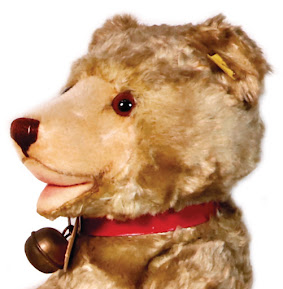
Here we have lot #3977, a most appealing Teddy Baby made from golden artificial silk plush. His starting bid is a very conservative 750 euro. It is cataloged simply as, "teddy-baby, synthetic silk plush, complete with button, sign and cloth tag label, red writing on sign, very nice original-condition, with original-collar and bell, 30 cm, rare." This sweet cub appears to have all of his IDs, including his button, yellow ear tag, and red bear faced chest tag. Given his IDs, materials, and appearance, Steiffgal suspects this irresistible imp may have been made in the late 1940s.

What is not to love about this fine fellow?
The catalog pictures suggest his condition is quite wonderful, and his happy-go-lucky expression lights up any room. Artificial silk plush is a delicate fabric which loses its shine and soft texture easily, so to find a vintage example which still has its "sheen" is unusual. Although his paw pads are not specifically called out, Steiffgal has a much loved, artificial silk plush Steiff Teddy baby from this similar time period in her collection. She has linen paw pads. That might just be the case for lot #3977 as well.

Steiffgal's second pick is also quite the head turner.
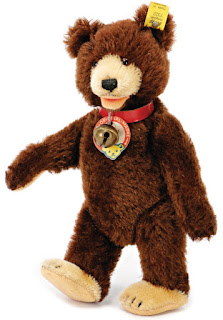
This is lot #4234, an early postwar brown mohair Teddy Baby with all IDs and a million watt smile. His starting bid is 220 euro and he is cataloged as, "teddy-baby, produced 1949-53, with button, chest label and cloth tag label, No. 7322, original condition without damage , additional with US-zone cloth tag label, paws in very good condition, 22 cm, nice full mohair, condition without damage."

The auction catalog photos suggest that this sweet guy is in practically like new condition. Steiffgal is always a little sad when it is clear that a precious toy was not loved by a child as it was intended. On the other side of the coin, this example would make for a crown jewel in any collection, so there is some justice there. Over time, Teddy Baby bears have been produced in sizes ranging from a few inches to over five feet! In Steiffgal's opinion, the smaller sized ones - like this guy - are particularly appealing in their scale, presentation, and proportions. He would be easy to display, doesn't take up too much shelf or cabinet space, and would look charming as a companion for a larger scaled doll or Ted from any era.

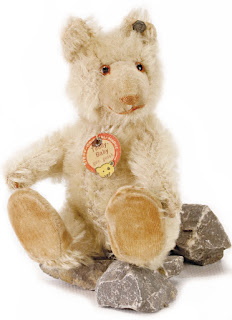
And last but not least, check out lot #4314, a super sweet - and super rare - prewar white Teddy Baby.
His starting bid is 520 euro. He is cataloged as, "teddy-baby, white, with button, long stretched F, breast sign, inscription Teddy Baby, inset velvet in face and velvet feet, with painted claws, 13 cm, produced from 1930 to 1933, white mohair, except of minimally place with mohair loss in very nice condition, very expressive, unusual, collection Koskinen."

There's something really magical about white mohair Teddy Baby bears.
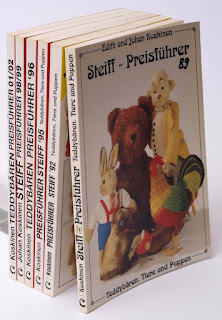
Unlike their blonde and brown mohair peers, the white versions were made for only a handful of years - from 1930 to 1933 overall. Blonde and brown mohair versions appeared from 1930 to 1943. As such, far fewer white mohair versions were produced over time, and most collectors would love to add one to their hugs. Like most coveted collectibles, it’s a supply and demand thing, and Steiffgal suspects this petite treat will be on many auction watchers' wish lists. It is also interesting to note that this example comes from the Koskinen collection. Edith and Johan Koskinen authored several well respected Steiff reference books and price guides over the years. You can see a few of them here on the left, the photo is from Bloss Auktionen. His top shelf provenance certainly adds to his appeal - if that's even possible!


Steiffgal hopes this discussion on Teddy Baby auction highlights has brought out a bit of your inner child today!

Have a question about one of your Steiff treasures? Let's talk! Click here to learn more!

Sunday, March 28, 2021

Isn't This Amazingly Rare Steiff Bear Pretty In Pink?

This next Steiff inquiry has Steiffgal tickled pink. And chances are, you will be too, after learning about this fantastic Steiff find. Fabienne from Europe shares the following...

"Hello, I have bought an antique Steiff and can't find anything about it in the Pfeiffer catalogue. He is about 38 cm standing, many bald spots but the remaining hair is fair blonde and long mohair. He is excelsior stuffed, some is showing through small holes near the nose etc. He still has his button. His covering is light pink, the mohair looks a very light blonde, but it could be faded. His glass eyes are a bit different than the others I have from that same period, they are a bit oversized. The nose stitching is light brown and still in good condition.

I live in Belgium and bought this bear on a local online marketplace, not only for bears, but everything someone wishes to sell, sort of an online fleamarket ;) I immediately noticed him and saw he was a bit different than my other Steiffs. He lives now happily ever after in my private museum (I have more than 500 bears) not all of them are Steiff. Yours sincerely, Fabienne"

A rose by any other name... just might be this terrific Ted!
Based on the photos provided, it is Steiffgal's best guess that this beautiful bear is a rare example of Steiff's Teddy Rose. As her name suggests, she was made from long, luxurious light pink colored mohair, but also appeared in bright gold mohair. She was manufactured in five sizes, ranging from 23 to 36 cm, measured sitting. These sizes were different than Steiff's standard line bears, possibly as a way to show that her pattern was a new direction for the company. Teddy Rose was stuffed with excelsior and kapok or just excelsior; had a hand embroidered nose, mouth, and claws; and oversized brown and black glass pupil eyes. She had a chunky build and a less prominent back hump. All of these design elements gave her a distinctly youthful appearance. Given her era of production, all Teddy Rose bears would have left the factory with a long trailing "f" Steiff button, just like this one has. According to company records, 5,271 yellow and 4,794 pink versions of Teddy Rose were manufactured in the c. 1925-1930 timeline. 

Today, examples of Teddy Rose are extremely rare on the secondary market. A fine example traded hands at about 19,000 euro (including buyer's premium) at the June 30, 2018 Ladenburger Spielzeugauktion GmbH Steiff Special Auction. The bear had a presale estimate of 2,200-4,400 euros and received an astounding 92 bids. Her cataloging read as follows, "teddy Rose, 44 cm, mohair, pink dyed, caused of old age faded, c. 1928, felt was at 1 paw retouched, mohair is except of minimally places in good condition, rare." She is pictured here on the left; the photo is from www.Liveauctioneers.com.

The Teddy Rose pattern plays a significant role in Steiff's 1920s-era product development and business expansion strategies.
It evolved in part from a directive from Richard Steiff, who was in America from the early 1920s onward growing his family’s business in North America. He noted that by the early 1920’s, the company’s legacy designs - which were almost two decades old by this point - had run their course and did not match the aesthetic or culture of the roaring 1920s. On February 6, 1925, he wrote to his family in Germany, “I am asked almost daily for new products; and I always have to answer that we do not really want to develop new products, since we can hardly cope with the delivery orders we receive for our old toys. However, the stiff competition here means we must be on our toes.”

Also in 1925, he notes, “…Our teddies, in the show room here in New York, appear colorless, sober, and insipid. I feel inclined to decorate all the teddies we have left with huge, colorful silk ribbons; only then can we ask a slightly higher price.”

The folks in Germany took Richard’s directives seriously, and the company's design team started working on entirely new Teddy Bear patterns.
For the most part, these patterns were softer and rounder than the company’s legacy patterns; incorporated longer, often playfully colored mohair into their designs; had larger eyes and childlike personalities and presentations;  and had distinctive facial or paw detailing. Some were distributed with collars, ribbons, or other accessories. And, for the first time ever, these new Teddy Bear designs were given appealing “real” names. They included Happy, Teddy Clown, Petsy, Teddy Baby, Dicky, and the cub under review here today - Teddy Rose. Several of these beloved friends are pictured here on the left; the advertising image is from Carsten Esser's 1920-1929 Steiff Kataloge.

Steiffgal hopes you've found this discussion on the company's Teddy Rose as joyful as a colorful bouquet of spring flowers!

Have a question about one of your Steiff treasures? Let's talk! Click here to learn more.

Monday, February 15, 2021

This Delightful Midcentury Steiff Treasure Is Dressed For Success!

There's no need to skirt the issue when it comes to this week's Steiff story! Check out this inquiry from Elizabeth, who asks about the history and timeline associated with an adorably dressed girl doll she recently added to her hug. She shares,

"I purchased and recently received off of eBay this cute little Teddy Baby doll, I think. I'm guessing that she is from the late 40’s because it appears she had the US Zone tag removed/worn off from her leg at some point. Her head and the tops of her paws and feet are mohair and her body is cloth and excelsior stuffed. Her arms are a little floppy. It seems like she did a lot of hand holding in her time. What do you think, am I even close to right?"

This ever-cheerful design always makes Steiffgal's heart happy. Elizabeth's doll was made in 25 cm and appeared in the line from 1950 - 1957. This head jointed model appeared as a boy, dressed in a red jacket, white shirt, and black shorts, or a girl, in a red jacket, white shirt, and green skirt. All the clothes were removable, so it finding an example today in all original clothing is quite rare. They were simply called "Boy Doll Bear" and "Girl Doll Bear" until 1954 when they were more lovingly named "Teddyli." The boy and girl dolls together are pictured here on the left; the image is from Pfeiffer's 1947-2003 Sortiment. A similar pair of boy and girl dressed Teddy baby bears, produced in a blondish-yellow wool plush, appeared in the line from 1951 - 1954.

Teddyli, of course, is based on the company's legacy Teddy Baby bear design that was introduced in the 1920s. This pattern proved so delightful, and so popular, that it because the inspiration for many novelties over the years. Post World War II Teddy baby novelties included a display sized Teddy baby (produced in 150 cm in brown mohair in 1960 and 1967); a press-and-release musical Teddy baby (produced in 25 cm from 1950 - 1951); and a tiny Teddy baby doll on a rubber body named Teddyli (produced in 12 cm in brown mohair from 1955 - 1957.) Tiny rubber and mohair Teddyli is pictured here on the left. Steiff also produced Teddy baby as a 17 cm hand puppet; he appeared in brown and maize mohair from 1929 - 1943 overall; and then again in brown artificial silk plush and then mohair from 1949 - 1978 overall.

Now let's take a closer look at this item's IDs.
When she left the factory in Giengen, she almost certainly had her Steiff button and a yellow ear tag with the article number "325 M" on it. These digits correspond to 3=mohair, 25=25 cm tall, and M=maedel (or "girl" in German.) Steiffgal has never seen one of these midcentury cubs with a chest tag. Elizabeth notes the remains of a US Zone tag in her leg seam. These tags were technically required in all German export products from the end of WWII through the early to mid-1950s to communicate that the item was produced in a "civilian" factory and met business and distribution standards set up by the American military government overseeing the United States' occupational zone in Germany. These usually actually appear on items produced in the c. 1951-1955 time frame. Given that observation, it Steiffgal's best guess that Elizabeth's Teddy Baby doll girl was made in the c. 1951-1955 time frame.

Steiffgal hopes this discussion on Elizabeth's mid-century find has tagged your interest in this collection era!

Have a question about one of your Steiff treasures? Let's talk! Click here to learn more.

Sunday, January 3, 2021

Kicking Of 2021 With A Huge Steiff Smile!

It's the best of all worlds when it comes to Steiff's prewar animal dolls! And their appeal seems to transcend borders and continents. Check out this note from a friend in the UK who asks about Steiffgal's beloved "Bub" animal doll. It should be no surprise for you to learn that Bub has a passport of his own, given he is Steiffgal's favorite travel buddy! Marcus shares:

"I keep watching your videos and love your travel companion Bub.
Especially his background, why he is constructed the way he is and the scarcity of material at the time. I was trying to find a bear like him and it was harder than I thought. I found one finally on eBay. Do you think his Lederhosen and green linen shirt are original? They seem to be as they fit beautifully. Also the linen shirt appears to be the same type of weave as his body. It is also hard to find literature. Do you know of any literature which deals with this particular design of the head jointed animal dolls in substitute material? Thank you in advance for any help or insight you can provide.
Cheers, Marcus"

It's a clothes call when it comes to this great bear.
Yes, indeed this is one of Steiff's irresistible prewar animal dolls. Not a lot is published about them and most information needs to be distilled from catalog listings and through historical context and interpretation. This cute cub has the head of the beloved Steiff Teddy Baby design and the body of a simple doll. He is head jointed, has dangling arms, and a solidly stuffed torso and legs. His head, hands, and the tops of his flat feet are made from what looks 
like light blonde woolen or mohair plush; it is hard to exactly tell from the photos. His body and limbs are made from a flesh colored fabric. His face is detailed with brown and black glass pupil eyes, a brown hand embroidered nose, and a smiling, tan felt lined mouth. You can see his long trailing "f" Steiff button in ear and traces of his red ear tag in the photo here on the left. He wears a green linen shirt and brown felt shorts. These articles are well fitting and appropriate for him but were "mommy made" and not manufactured by Steiff. You can tell because: 1. the shirt color is far too vibrant and without wear and should have faded in proportion to the aging on the bear, and 2. the shorts - they are cute - but not of Steiff clothing quality.

This Teddy Baby doll was one of several different animal dolls produced in the 1930s and 1940s.
Other popular models included a number of rabbits, a cat, a pug (picture here on the left, photo from Steiffgal's collection), an elephant, a Scotty, and a German Shepherd. Regardless of size or date of manufacture, each of these pre-war treasures produced from 1931 onward was branded as Steiff with an ear button and ear tag. However, unlike most other Steiff products of the 1930’s and 1940’s, these dolls did not leave the factory in Germany with chest tags. The IDs on Marcus' bear suggest that he was made in the early to mid-1930s at the latest.

These sweet animal dolls were all dressed for success. Their clothes were removable, charming, lovingly stitched, and produced from the finest cottons, calicos, felt, and other materials. They were dressed as boys or girls, or in in occupationally or nationally inspired clothing. Numerous outfit variations were available for some of the more popular models. For example, Steiff’s Puppkatz or cat doll, which was introduced in 1931, was available in up to 11 different outfits over time. These included pajamas, dresses, swimsuits, playsuits, and traditional German attire including dirndls and trousers. Here on the left, you can see a c. 1938 catalog page showing Marcus' Teddy Baby bear featured at the top of the image; his nine original outfits at the time are noted next to his image. You can click on the image to make it larger. 

Steiffgal hopes this discussion on Steiff's delightful Teddy Baby doll bears has been a two for one experience for you. 

Have a question about one of your Steiff treasures? Let's talk! Click here to learn more!

Wednesday, August 19, 2020

Sending Gigantic Midcentury Teddy Hugs To You!

Steiffgal's got news.
Really big news! Super-humongous news! A brand new cub has joined her hug, and she couldn't be more excited or pleased. But this isn't just any Ted, he's really in a class all to himself. Come learn more about this bouncing bundle of joy and what makes him so interesting from the design and historical perspectives.

This big, beautiful bear is of course a huge Teddy baby. He measures 40 inches or 100 cm tall. He is solidly stuffed with excelsior and weighs a whopping 16 pounds. He is five ways jointed and made from glowing, long shaggy blonde mohair. His inset facial muzzle and the tops of his flat toddler feet are made from shorter matching blonde mohair. His nose and claws are hand embroidered in brown. He has a smiling, open, peach colored felt lined mouth and a touch of tan airbrushing to give his face a bit more definition. The same peach colored felt lines his paw pads. His eyes are oversized, brown and black pupil style. And he wears a blue leather color that is decorated with a bell and 16 raised script style buttons. His working growler is activated by a metal pull string and loop on his back.

The Teddy Baby pattern is a legacy one for Steiff.
It debuted in 1929; pre-World War II, Teddy Baby was made in 9, 12, 13, 15, 20, 22, 25, 30, 35, 38, 40, 45, and 65cm sizes. It is interesting to note that Teddy Baby was one of the very first items Steiff started producing when the factory in Germany opened after the war. Due to limited supplies and logistical complications, he was made in artificial silk plush in 1948. Then, once supplies and operations were back in order, he was produced in blonde or brown mohair in 9, 22, 28, 30, and 40 cm in the identical pattern made before the war. All sizes over 9 cm came with a leather collar with a bell. Teddy Baby remained in the Steiff line from 1949 to 1957, although due to his popularity with collectors, has been replicated many times in numerous limited edition series. Here above you can see a variety of early postwar standard line Teddy baby bears ranging from 9 to 40 cm. 

So... what's the history behind this larger than life version? He's only had one family, so Steiffgal was able to get the entire scoop on him from his original owners. Here's what she learned. This bear was purchased in about 1950 from Macy's on 34th Street in New York City. The woman who Steiffgal purchased this bear from was a little girl at the time and accompanied her father to the store to pick out a special present for her mother. Their mom loved Teddy bears, so of course Steiff would be a perfect fit for this mission. The two walked into Macy's toy department and saw him there... and it was love at first sight! They bought the bear right away for $100 at the time. Today, $100 in 1950 dollars has the buying power of almost $1,100 today! A pretty penny both then and now. Mom loved the bear, and treated him like a prince - bringing him out once a year to add to the family's Christmas celebrations. 

Size defies in a number of ways when it comes to this Ted.
Clearly, he is not from the standard line, which topped out at 65 cm early postwar. Steiff did make a display, or studio sized brown mohair Teddy baby in 60 inches or 150 cm in the mid-1960s. You can see the 1967 catalog page promoting this bear above. And, he's not a "one of a kind" as other almost identical one was sold at auction a few years back. It is Steiffgal's suspicion that this bear in this size may have been produced in very low numbers for "special" or high profile customers around 1950. This was exactly the timing in which Steiff was trying to regain its worldwide distribution, reputation, and visibility right after WWII. As such, it is possible that the company produced these "monumental" sized and styled bears to catch the eye, attention, and wallets of affluent midcentury consumers. And what better place than Macy's in NYC to make that happen!?

Finally, Steiffgal can't emphasize enough the power of a good scrub when it comes to welcoming a new vintage friend into your hug.
Yes, this Ted is GORGEOUS and his original family took extra loving care of him. However, he's been around almost 70 years without a bath... so that's the first thing Steiffgal did when she got him home. Over the course of two hours, he went from totally handsome to POSITIVELY GLOWING with the help of a dozen white washcloths, a light cleaning solution, and lots of elbow grease. You can see his "before" and "after" cleaning photos here on the left.   

Steiffgal hopes this discussion on this huge Teddy baby has brought you enormous joy today.

Have a question about one of your Steiff treasures? Let's talk! Click here to learn more.

Saturday, April 4, 2020

Embrace This Window Of Opportunity To Bring Joy To The World Through Your Teddy Bears!


This bears repeating: there's no better place in the world for your Teds right now than in your windows!

Perhaps you've heard of this new movement - where people all over the world are putting Teddy bears and other stuffed friends in the street facing windows of their homes. And the reason for this? So children (and adult children, like us) can spot them on "Teddy bear scavenger hunts" on family walks during this global health crisis. And given that stories about this phenomenon have appeared on media outlets like the BBC, FOX, The New York Times, The Boston Globe, and many others - it just goes to prove what doll and bear collectors have known all along... that there is nothing more universally healing and comforting than a Teddy bear.

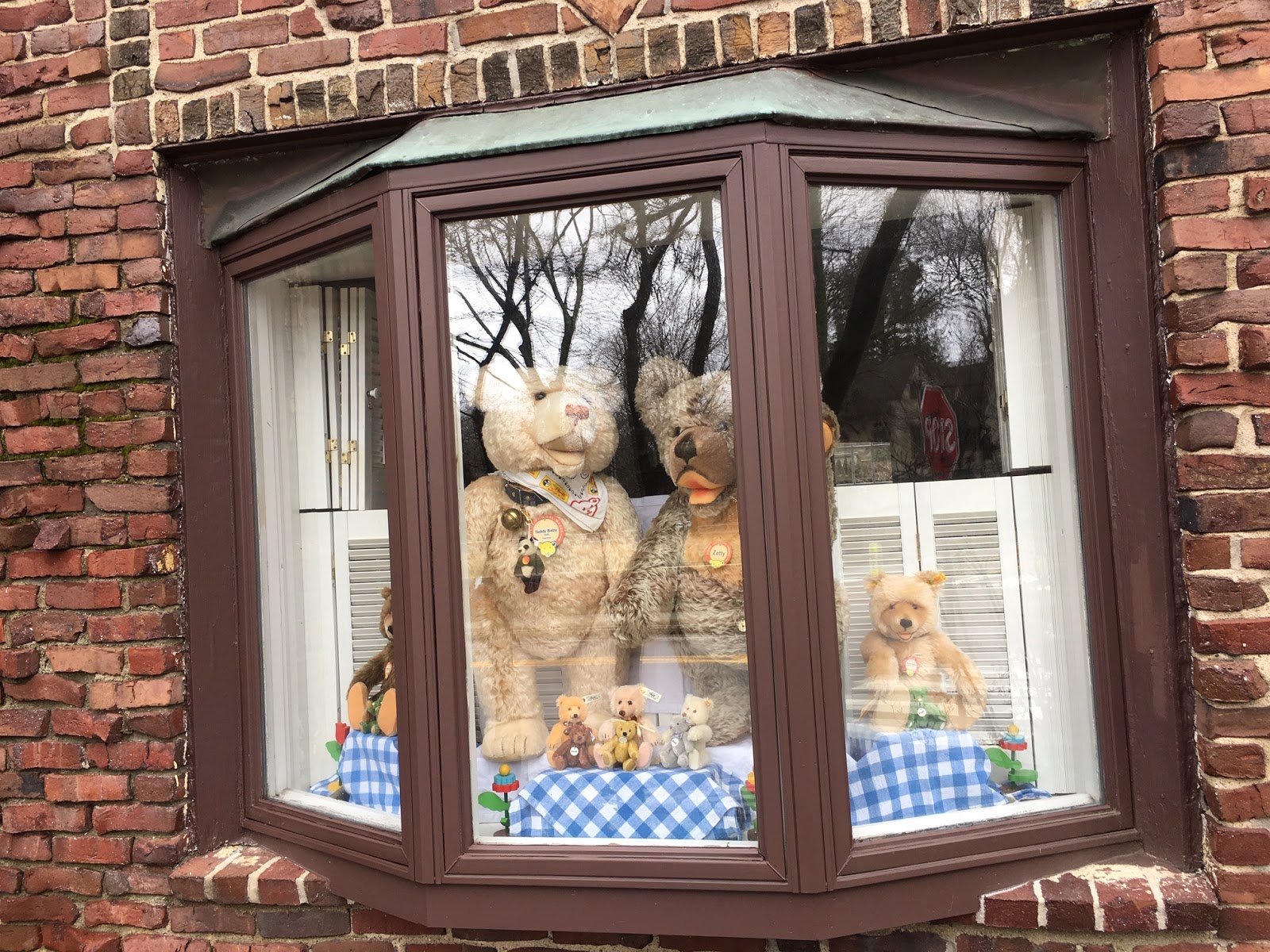
Steiffgal immediately embraced this unusual "window of opportunity" and sprang into action. The front of her home, which has two bay windows, faces a well-travelled street walked by locals and visitors alike. The bays usually display a collection of succulents, given their full sun exposure. Steiffgal moved all the greenery into one bay, so the other could feature bears. The cubs selected for display include a 75 cm replica Teddy baby, an 80 cm studio Zotty, two 35 cm Teddy baby replicas, three 15 cm Teddy baby replicas, and three teeny-tiny 10 cm cubs. All the bears are sitting or standing on blue and white checkered risers - as a nod to their Bavarian heritage. A few wooden flowers - also made by Steiff in the late 1960s - early 1970s as part of a floral construction/puzzle set - add a spot or two of primary color to the display. 

The bears chosen for the window display were selected to bring a smile to your face - literally. Most of the cubs have open, smiling mouths. From the collector's perspective, the most interesting one is the 80 cm studio Zotty bear. This fine fellow was made in the mid-1960s and was produced in both 80 cm and a whopping 100 cm. He really translates proportionally well in this huge size, but is quite chunky - definitely too large and heavy to be a hands-on plaything. This handsome hunk retains his original yellow silk ribbon, as well as his huge chest tag, large raised script button, and handwritten, yellow ear tag as his Steiff IDs. The 1967 catalog page for studio Zotty is featured here on the left. 

So what's been the feedback on this contribution to the Teddy bear scavenger hunt? It has been delightful to see walkers of all ages stop, point, and study the vignette. Some people take photos, other take selfies with the bear display in the backdrop. One youngster was so excited to see the bears he started squealing in delight (or maybe fear?) The display does seem to offer passers-by a spot of happiness and levity in a period seriously devoid of both. 

If you are willing and able, I would ask you to consider also putting a Steiff or two in a visible window in your home, apartment, or condo. Please help spread universal love, goodwill, and kindness through this no-cost gesture. 

Steiffgal hopes this discussion on displaying Teddy bears in your windows has been absolutely "pane"-less to you. 

Have a question about one of your Steiff treasures? Let's talk! Click here to learn more!

Saturday, March 14, 2020

Let These Four Cheerful Cubs Brighten Your Day!

It's hard to bear all the bad news lately. You can't turn on the TV or radio - or check out Facebook - without learning something depressing or scary. In times like this, it's important to take good care of yourself, and surround yourself with loving things. So today's blog has two simple missions - first, to give you a reason to smile and second, to provide a bright spot in your day. Here are a quartet of Steiff friends that are happy to help you with those important goals.

Our first terrific Ted is Penelope. She is one of Steiff's early 1950-era Teddy baby dolls. She stands 22 cm tall and is head jointed. Her unjointed body is made from tan fabric while the tips of her feet and hands are made from brown mohair. Penelope is clearly a fashion plate with her adorable light blue Peter-Pan style blouse, seersucker apron, and blue velvet pants. And this girl loves bling, as you can see from her pendant (which is actually an earring Steiffgal found, but don't tell her!) and her UFDC pocket pin. Steiffgal found Penelope at a doll show in 2016, and they've been close friends ever since. Penelope has accompanied Steiffgal to dreadful things like dentist and doctor visits and the like, and is always a great source of comfort - and conversation.

Here we have Maisy, who's as fresh as a daisy! She is a Steiff Teddy baby bear with really unusual velvety-cloth paw pads. Given this out-of-the-ordinary fabric, she probably dates from just before or just after WWII. Maisy is about 25 cm tall, fully jointed, and made from long and shaggy light maize colored mohair. Her nose and claw stitching is very light brown in color. Like Penelope, she's quite the girly-girl. She loves her pretty denim frock (which was made by Steiff) and is quite proud of her fantastic charm necklace, which features a bunch of playful beaded friends. Steiffgal found Maisy on eBay, and was immediately smitten by her great coloring and eternally optimistic personality. As soon as Maisy jointed the hug, she caught the eye of Charles, a 40 cm white Steiff Teddy baby from around 1930. It's easy to see why. They've been the happy couple ever since.

Our next sweet treat is Candy, who is 28 cm tall, fully jointed, and made from chocolate brown artificial silk plush. Candy was made around 1948 or so. She has very interesting linen paw pads on her hands and feet. She looks a little grumpy, but that's ok if you are a supermodel like she is, and she doesn't want to distract attention away from her totally terrific Teddy bear slippers. These quality kicks are made from brown mohair, have felt soles, and are decorated with brown and tan embroidery; even the bears' ears are dimensional. This slippers were a surprise gift from a friend, so they are even more special! Isn't it interesting how great footwear can make the whole day better? Steiffgal purchased Candy at auction; she wasn't planning on bidding on her, but you know how that goes.

And last but not least is this zany Zooby bear. This little joker is 28 cm and was made in the mid-1960s. He is head and arm jointed. His pointy claws are made from white felt. He is self-standing; the soles of his feet are made from a brown leather-like material; the tops are made from dark brown mohair. From a historical perspective, Zooby’s design is based somewhat on Steiff’s pre-war Zirkus-Baer or Circus Bear, a 32 cm standing bear produced from 1935 through 1939. Zooby likes wearing a felt clown hat, for obvious reasons. You can't help but notice his goofy facial expression, like he's just told a bad joke and is waiting for your hysterical response. Just the thought of that can't help but make you smile, right?

Steiffgal hopes these four cheerful cubs have brought a little humor, levity, and play to your day.

Have a question about one of your Steiff treasures? Let's talk! Click here to learn more!

Saturday, April 20, 2019

All Smiles Over This Latest Steiff Teddy Baby Find!


Baby love! It's no secret that Steiff's wonderful prewar Teddy Baby bears and their novelties really float Steiffgal's boat. Like many Steiff enthusiasts, she simply cannot resist these dear cubs and their impish, carefree, and endearing personalities. And because of their unique construction, no two ever look exactly alike, only adding to their collectibility. Here's her latest adoption - a precious, pint sized cub with a distinctly old fashioned look and feel to him. It's hard to believe that he's nearly nine decades old despite his youthful name and appearance.

There's no question this is one beautiful baby. Teddy Baby is made from brown mohair, stands 17 cm tall, and is fully jointed. He has all of the beloved characteristics of Steiff's legacy Teddy Baby pattern: a distinctive, well defined muzzle; flat, broad, feet made for standing; downturned wrists; and sweet, toddler-like features and proportions. His irresistible face comes to life with an open, smiling mouth detailed with red (in his mouth) and brown (around his eyes and mouth) airbrushing; a black hand embroidered nose; and proportional brown and black glass pupil eyes placed right on the seam where his velvet and mohair facial fabrics come together. 

This smiling sweetie is also one well accessorized cub. He wears a red leather collar that is decorated with six dimensional metal studs, two long trailing "f" Steiff buttons, and a little brass bell. These wonderful and period compliments are all original to him, and are often lost to time. Teddy Baby retains his long trailing "f" Steiff button in ear and named chest tag with the words "ges. gesch" right under the words "Teddy Baby." "Ges. Gesch" is shorthand for "Gesetzlich Geschutzt." These German words translate roughly to the concept of a "trademark" as we have here in the USA. Teddy Baby examples with "ges. gesch" chest tags suggest that they were manufactured around 1930 or shortly after. It is Steiffgal's guess that the Teddy Baby under discussion here is a large 15 cm version, given his construction and detailing.

Keeping it all in the family, Steiffgal thought it would be fun to compare two versions of Steiff's 15 cm brown mohair prewar Teddy Baby bears - one with an open mouth and one with a closed mouth. Today's open mouth, standard line Teddy Baby bear debuted in 1930 and was produced in 9, 12, 13, 15, 20, 22, 25, 30, 35, 38, 40, 45, and 65 cm through 1943 overall. Steiff also made a closed mouth version of its brown mohair Teddy Baby bear. These were manufactured in 15, 20, 25, 30, 38, and 45 cm from 1929 through 1931 overall. Here are a few subtle design differences between the two cousins...

  • Muzzle: The open mouth version has a velvet muzzle and the closed mouth version has a mohair muzzle.
  • Hand pads: The open mouthed version has velvet hand pads and the closed mouth version has felt hand pads.
  • Feet: The open mouthed version has all velvet feet and the closed mouth version has mohair feet and felt foot pads.
  • Claws: The open mouthed version has painted foot claws and no hand claws, and the closed mouth version has black hand embroidered foot and hand claws. 
Steiffgal hopes this discussion on Steiff's 15 cm prewar brown Teddy Baby bears has been sweeter than chocolate!

Have a question about one of your Steiff treasures? Let's talk! Click here to learn more. 

Sunday, November 25, 2018

My Lips Are Sealed Over This Rare Steiff Closed Mouth Teddy Baby Bear

Smile, and the world smiles with you. But sometimes with Steiff, a treasure does not have to be "bearing" a grin to make the world happy. Such is the case with this petite treat that Steiffgal recently added to her collection. Take a look at this happy handful and see what makes him so distinctive from the design and product development perspectives.

Oh baby! Steiff enthusiasts are certain to recognize this beloved pattern as that of Teddy baby. This version is about 17 cm tall, standing, fully jointed and made from chocolate brown mohair. His paw pads are made from tan felt. He has all the legacy Teddy baby features, including flat, cardboard lined feet designed for standing; downward curving paws; a prominent muzzle; and a delightful, childlike appearance. However, unlike most prewar Teddy baby bears 15 cm tall and larger, this one has a closed mouth - making him quite the rare bear indeed!  

Let's give a shout out to this pensive pattern. Just for comparison, consider the following history. Steiff's beloved, open mouthed brown mohair Teddy babies were made prewar in 13 sizes ranging from 9 to 65 cm from 1930 - 1943 overall. Given the number of years and sizes produced, these appear with somewhat regularity on the secondary market. However, Steiff manufactured its brown mohair closed mouthed Teddy babies only in six sizes ranging from 15 to 45 cm from 1929 - 1931 overall. So simply based on the numbers, finding a Steiff prewar, closed mouth Teddy baby is sort of like hitting the lottery! Here on the left you can see three Steiff brown Teddy baby bears: the one on the left is the closed mouth version under discussion today, the one in the middle is an open mouthed version from the 1950s, and the one on the right is an open mouthed version from the 1930s.

It's always fun, and interesting, to think about why a pattern was produced for only a handful of years. Clearly, the closed mouth version was introduced with optimism, as shown in this leaflet from October, 1929. The picture is from Carsten Esser's Steiff Katalog 1920-1929. Although there is nothing exactly documented (at least that Steiffgal can find) about why the closed mouth pattern was discontinued so quickly, here are three possible reasons why.

The first, from the business/financial perspective, is that the open mouth version simply sold much better than the closed mouth version. Although the two are similar, the open mouth version appears sweeter and kinder than the closed mouth, more "pouty" version. This may have called to consumers' preferences, and pocketbooks, and the company simply "fished where the fish are."

The second, from the product development perspective, is that the open mouthed version might have better reflected the company's design priorities than did the closed mouth version. The general Teddy baby pattern was invented due to a late 1920's directive of Richard Steiff. He asked that the company develop products with "smiling faces that come alive." It is pretty clear that the open mouthed version is more "smile-ly" than the closed mouth version.  

The third is a bit more esoteric. From the historical and public relations perspectives, it is possible that the open mouth version might have projected a kinder, more welcoming face for the company than did the more solemn, closed mouth version. This is important when you consider what was happening in Germany and the world at the time that the pattern launched. Germany entered a period of economic depression and widespread unemployment in 1929 while growing anti-German sentiment were starting to cripple Steiff's export markets. As such, the happy-go-lucky open mouthed Teddy baby was the perfect, joyful fit as the company's brand ambassador at a most challenging time.  

Steiffgal hopes this discussion on closed mouth Teddy baby bears has opened up new ways of thinking for you about this delightful legacy pattern. 

Have a question about one of your Steiff treasures? Let's talk! Click here to learn more.

Saturday, July 28, 2018

Let Me Call You Sweetheart!

Won't you be my Teddy bear? All Steiff collectors agree - there's no better six words in the entire world! And that's just how Steiffgal felt when a new vintage friend joined her hug a few weeks ago. He was purchased at an auction in Germany sight unseen, and when he crossed the pond and arrived at his new home, he was even BETTER than expected. Don't you just love when that happens? Come meet Marshmallow, and learn why he is so interesting from the historical and product development perspectives.

This precious cub is as sweet as sugar! Marshmallow is 30 cm standing, 20 cm sitting, and fully jointed. He is made from white wool plush and is solidly stuffed with excelsior. His pads are made from flesh colored felt that has faded considerably. His simple but beautiful face comes to life with round black and brown glass pupil eyes and a brown hand embroidered nose and mouth. He has four brown claws on each of his paws. He has a non-working squeaker in his belly. Marshmallow's IDs have been lost to time, but it is Steiffgal's best guess that he was made in the mid-1930's to early 1940's, given his materials and presentation.

Now let's dive into material matters. Although wool plush is a lovely and very durable material, Steiff has usually made items from this fabric just before, during, or after periods of war or hardship. It is considered a "substitute" material, used in the place of more expensive and higher quality mohair. Sometimes these items also have linen or lesser quality felt on their pads or lining their ears as well.  Wool plush has a really old fashioned look to it, and has a "continuous" but bumpy feel on its surface - not like mohair which can feel softly "prickly" like a hooked rug. 

It is interesting to note that Steiff created many of its beloved and most popular 1930's-era designs in wool plush. Sometimes these items, like the company's Teddy baby bears, are specifically called out in the standard Steiff reference books. But others are not. For example, Steiffgal has a wool plush Jocko monkey in her hug; he is identical to the mohair version we all know and love. And as far as Steiffgal can tell, this white wool plush Teddy bear is not noted in the Sortiment books.  She handled a similar blonde wool plush Steiff bear for an auction client several years ago - so they were produced in some volume - but probably not many overall. 

Another factor that makes this wool plush bear quite the "looker" is his general appearance. His body has a distinctly long and lean look to it, and his dear face has quite a pensive expression. After studying bears from every decade, it has been Steiffgal's observation that bears from the mid-1930's to the early 1940's do indeed have this more "austere" look to them - perhaps matching the socio-economic climate of the time in Germany? Bears from this era also are usually produced in very basic hues, like white and blonde. Just for comparison, check out this photo on the left.  It features a similarly sized c.1906 Ted, a c.1929 Teddy Baby, and Marshmallow from the c.mid to late 1930's. What a difference a decade or two makes!

Steiffgal hopes this discussion on this wool plush cub has been beary enjoyable for you.

Have a question about one of your Steiff treasures? Let's talk! Click here to learn more.
The teddy bear search engine