Tuesday, September 14, 2010

Art Imitating Life, Steiff Style!

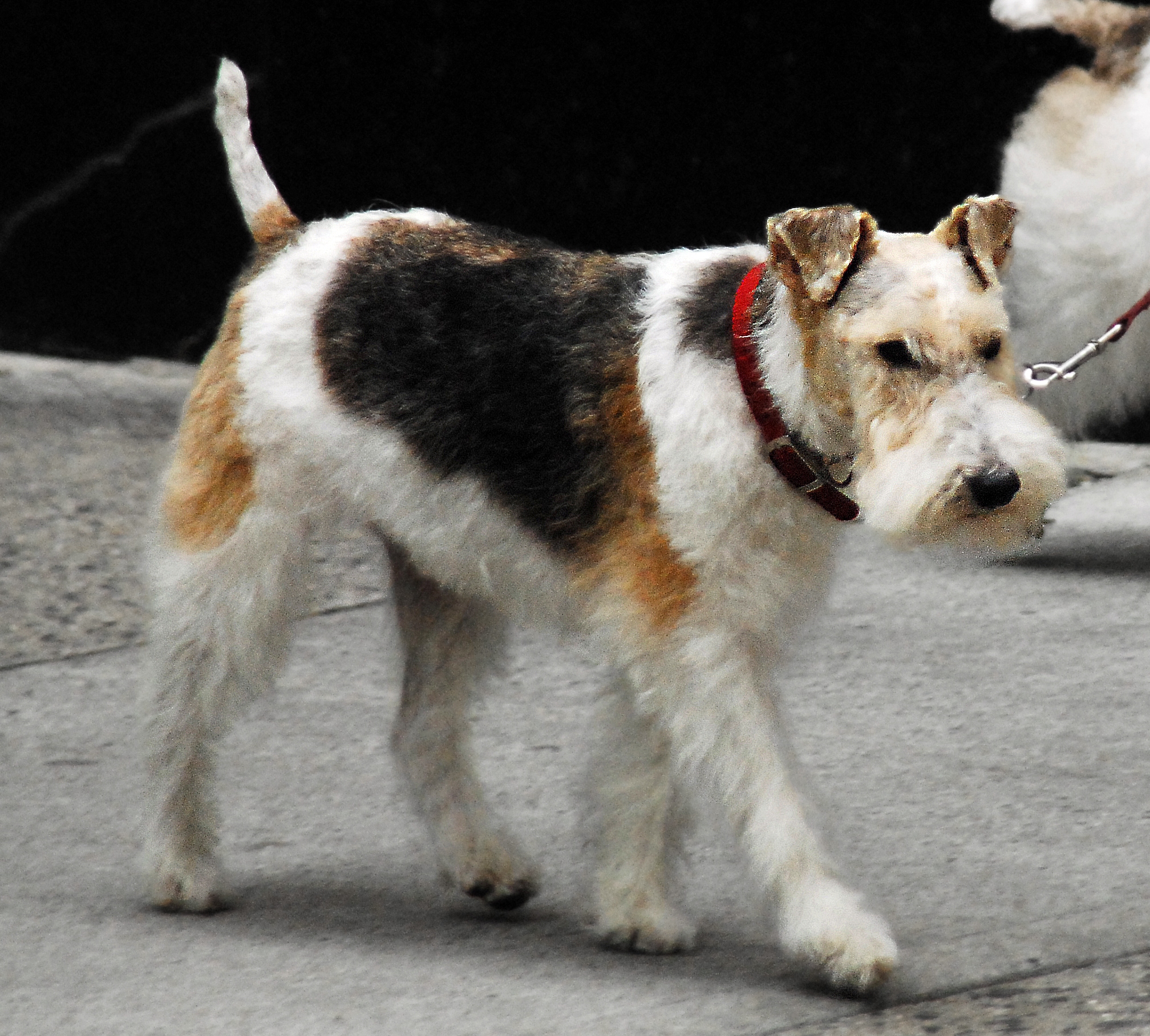
Life can imitate art, and in this case, the "art of Steiff" seems to be imitating real life!  Check out this note from Alison, who seems to be blessed with both a real Fox Terrier, as well as a collectible one by Steiff.  Let's hope the two never meet for a chew-fest!  She writes...

 
"Hi, 
 
I have a small Steiff terrier dog that I was hoping you could give me some information on.  
 
He is slightly off white with about 4 black spots and brown ears.  He is approximately 16cm tall and 22cm long from nose to end of tail.   He is not jointed and has a black stitched nose and black stitched claws. I'm not sure but he feels like he's 'straw' filled.  His eyes are greeny/ brown with black pupils.  I think he is made from mohair but I'm not sure.  He is a bit bare but is in quite good condition overall.
 
There is a worn yellow label and a Steiff silver button measuring approximately 5mm which is on the underside of the overturned ear.
 
I  was wondering what year this terrier would have come from and I know you can't give valuations but is there any value to it.  I  have attached a few photos.
 
Looking forward to hearing  from you and I'm keeping this toy safely away from my real fox terrier Ricky who would love to play with it.
 
Regards, 

Alison"
 
It is easy to understand why Ricky would be interested in his lovely Steiff cousin!  What Alison has here is Steiff's Fox Terrier. He was called Fox up to 1953 and Foxy from 1954 onwards. As she notes above, Foxy is unjointed and made from white mohair that is detailed with black airbrushed spots. This pattern has brown glass pupil eyes, a simple embroidered nose and mouth, and brown ears, which are felt in the smaller versions and mohair in the larger ones.  This overall dog model was produced from 1949 through 1975 in 11 sizes ranging from 7 to 36 cm.  Alison's Foxy, with the "lentil" style button, indicates that he was made in the 1969 through 1977 time frame. 

Fox terriers are a legacy breed for Steiff, first appearing in the catalog in 1899. Pre-war, close to 40 different models were produced in practically all forms, including sitting, standing, and lying toys; woolen miniatures; puppets; pincushions; rolling toys; and waterproof bath toys. The different models were named Foxterrier, Foxy, Fox, Ajax, Strupp, and Spotty, among others. Post war, Fox Terriers remained quite popular; the breed was one of the first items produced once the factory was up and running in the late 1940’s. Alison's Foxy is one of a large number of new smaller dog designs introduced in the early 1950's; other well known patterns of the time include Dally the Dalmatian, Peky the Pekingese, and Snobby the Poodle. In one form or another, A Fox Terrier has appeared in the Steiff line almost continuously to this day.

As for value, as always, Steiffgal believes something is worth what someone will pay for it.  Based on recent auctions and other sales, Steiffgal would think he would value in the $50-75 range, given his condition and age.  
 
Steiffgal hopes this "crazy like a fox" discussion on the history of Steiff's Fox Terriers has given you new insights on this beloved vintage pattern.  
 
Have a question about one of your Steiff treasures? Let's talk! Click here to learn more.

Monday, September 6, 2010

A Whole "Lot" of Steiff Love At The Upcoming Christie's Auction in October

The excitement surrounding the upcoming Christie's Steiff auction in London has risen to a stampede pace!

Check out this photo of an AMAZING collection of smaller Steiff zoo animals that will be part of the October sale as its very own lot! This photo was sent to Steiffgal from Christie's to share with the Steifflife readers... talk about an awesome "instant collection" for the lucky bidder! According to Christie's, this grouping - number 38 of the auction - is described as... "Nineteen post-war hoofed wild animals and kangaroos - sold as one lot. Estimate: £500-800."

Just to keep things fair - and Steiffgal recommends never upsetting the laws of nature - lets take a closer look at the items in this remarkable collection in alphabetical order!

B is for bison, and here we have two of Steiff's finest earliest examples. The two bison on the top shelf of the photo appear to be the 12 and 17 cm size; this pattern also came in 30 cm. These bison are unjointed, made from long, shaggy tipped mohair, and are selectively shorn around their legs and backsides. Their “tail ends ” are airbrushed to give them their characteristic body shape and varying textures. Both have glass pupil eyes; the larger one has pert felt horns. It is interesting to note that this bison was introduced in 1960 as a US exclusive; a few years later, in 1962 and 1963, this identical design was produced in the same three sizes for worldwide distribution. You can tell the difference as bison with “90” as the last digits of their ear tag article numbers are from 1960; while those from 1962 and 1963 sport “00” as their last digits. This design appeared in the catalog through 1963.

C is for camel; this lot represents a "collection within a collection" of these desert dandies. The single-humped smaller one on the center shelf and the larger one on the bottom shelf are both Steiff's Dromedar or Dromedary camels. They are unjointed and have wool plush bodies, long velvet legs, and velvet faces. Their ears are felt. This design was produced post war in 14, 17, 28, ad 35 cm from 1950 through 1969. From a collector's and historical perspective, this pattern is almost identical to the one produced pre-war, from 1933 through 1942, except the older version has mohair legs. 

The double humped, or Bactrian, camel on the top shelf is a highlight of this zany zoo lot.  He is a bit of a mystery as he does not appear in the Gunther Pfeiffer's Steiff Sortiment books, the standard reference for collectors. He appears to be around 17 cm and unjointed. His chest tag dates him in the 1953 through 1971 range. Now take a close look at the previously described bisons and this specific camel in the lot photo. All have the same coloring, appear to be made from the same mohair fabrics, and have similar airbrushing details on their feet. It would be Steiffgal's best guess that the production timeframe of the Bactrian camel was similar to that of the bison, most likely between 1960 and 1963.
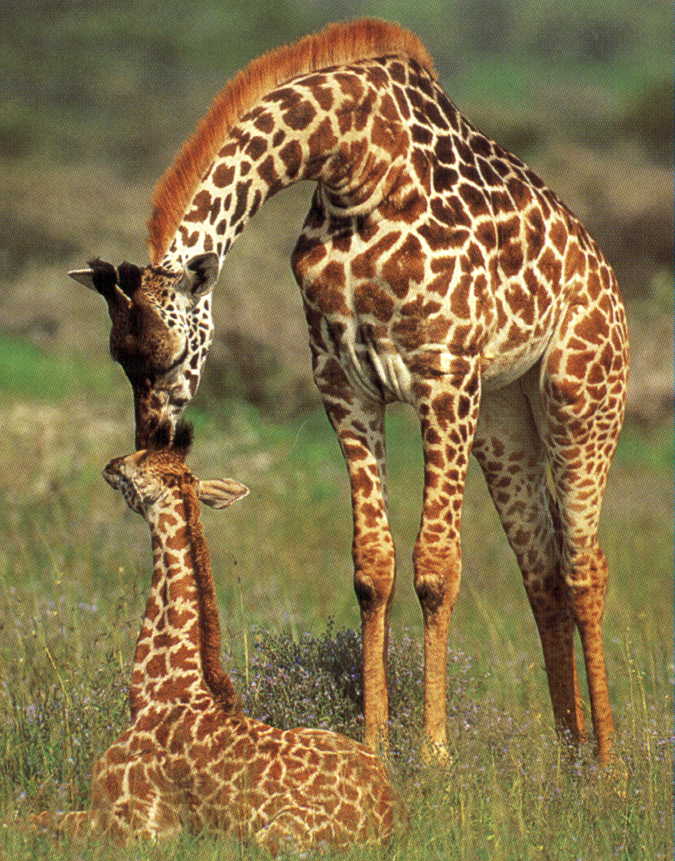
G is for giraffe, and its no stretch to say that most Steiff collectors would welcome these two tall treasures into their collection! Both of these giraffes are the model Steiff produced in 14, 28, 35, 50, and 75 cm in the 1953 through 1974 timeframe. The 14 cm version was produced in tan velvet plush while the four larger sizes were made from tan mohair. All were unjointed, carefully hand painted with their requisite orange spots, had little horns, and black eyes. The 35, 50, and 75 cm models had open, peach felt lined mouths. The giraffes pictured in this collection appear to be the 14 and 28 cm sized versions.

K is for kangaroo, so hop to it and take a look at this fantastic foursome. It took a little detective work, and a magnifying glass to the picture, but Steiffgal is all but certain that the three kangas on the bottom shelf of this picture are Steiff's Kaenguruh Kangoo or Kangaroo Kangoo. Kangoo was produced from 1953 through 1966; a newer quite similar kangaroo design named "Linda" took her place in the Steiff line from 1967 through 1974. Kangoo was produced in 14, 28, 50, and 65 cm. She is in a "begging" position, made from mohair, and has golden airbrushing on her back and sides and black airbrushing on her paw tips, ears, and face. The larger versions are arm jointed; all sizes have a pouch. The 14 and 28 cm Kangoos have plastic joeys, the 50 cm size have velvet joeys, and the 65 cm size have mohair joeys. 

But what about the baby 'goo on the middle shelf?  The smallest kangaroo in the picture appears to be about 10 cm, unjointed, and made from velvet. Like her Bactrian cousin, she is not specifically documented in the Steiff Sortiment reference books. Given her appearance and size, Steiffgal thinks that she may be a joey from a 50 cm Kangoo.

L is for Llama, and this fine example is a wonderful ambassador from the Andes mountains. Llama’s body is made from long cream-colored mohair with brown, black, and tan airbrushed spots. His legs (from mid-thigh down) and face are both made from off white velvet. His ears are tan felt with a bit of pink airbrushing. Check out his feet; they are remarkably similar in design to that of Steiff's Dromedary camels. Llamas are relatively uncommon in the Steiff catalog; this particular model was the first ever produced and was available from 1957 through 1969 in three sizes: 17, 28, and 43 cm. Steiff has also produced a Studio llama in the 1960’s and two soft plush play llamas in the 1990’s.

O is for okapi, a rare and exotic species most closely genetically related to giraffes! These Steiff okapi are located on the bottom left of the photo. Steiff produced these beautiful beasts in 14, 28, and 43 cm from 1958 through 1970. They are standing and unjointed. The two smaller sized versions are made from velvet while the larger one is made from mohair. Given that the two examples in this lot are velvet, they must be 14 and 28 cm. The larger okapi's ears are lined in mohair, a charming and unexpected detail. The hand stenciling and airbrush work on these Steiff okapi are simply remarkable, imagine the time and effort it took to get each stripe and highlight just right! These okapi are so much more than "ok" in Steiffgals book!

And finally, Z is for zebra, for Steiff collectors who see things in black and white! Here we have four supremely striped Steiff zebras, all that date within the 1953 through 1971 time frame, given their chest tags. Steiff produced this zebra design in 12, 22, 28, and 35 cm from 1951 through 1977 overall. Zebra is standing and unjointed. The smallest size is made from velvet and has felt ears; the larger sizes are made from mohair and have have mohair ears. All have a back mane of mohair are lovingly hand-airbrushed and stenciled, giving them their striped appearance.

Steiffgal hopes this trip to the Steiff zoo has been a fun and enjoyable excursion on this late summer day!  Never mind the herd mentality, she hopes to meet as many of you as possible at the auction!

Have a question about one of your Steiff treasures? Let's talk! Click here to learn more.

Monday, August 30, 2010

A Giant Steiff Fish Tale

Steiffgal just loves getting questions about Steiff family treasures, and that's no fish tale! Check out this letter from Arianne from Pacific Palisades, CA, who is fishing for answers about her long time and beloved "aquatic acquaintance." She writes:

"Hello,

My brothers and I have multiple Steiffs which date from the late 60's and possibly early 70's.  I own a fish which is quite large with wheels which I used to ride around on when I was little. I have had this fish my whole life and I love it so much. I can't seem to find any like it anywhere.

The eyes are missing but it is in quite good shape. I have considered repairing it but am afraid of it not being done by an expert. I am afraid to repair it as I am concerned to tamper with the original piece but I would love to have the eyes and make sure the few small tears don't get larger. 

Have you ever heard of large Steiff on wheels? Do you know where I could have it repaired?

Thanks so much!

Arianne"

Steiffgal's got this one down hook, line, and sinker.  What Arianne has here is what Steiff calls Reit Fisch Flossy, or Riding Fish Flossy.  This finned friend is 55 cm and made from mohair.  When she was new, she had marvelous, brightly colored hand-airbrushing and stenciling all over her body, very large puffy peach colored felt lips, and big brown and black pupil eyes.  She has an arched metal grip handle and foot rests for riding comfort. Her wheels are blue and have rubber tires.  Internally, she has an metal frame for stability (like a skeleton).  A rider steers her by adjusting her tail wheel.  Reit Fisch Flossy was made from 1965 from 1974.  To the left is a picture of what she looked like when new; this illustration is from Gunther Pfeiffer's 1947 - 2003 Steiff Sortiment book. 

Arianne's Flossy is the "mobile version" of Steiff's well known and beloved "Flossy" fish design.  Although Steiff featured a fish as a hanging pram toy in 1916, it wasn't until almost 50 years later than fish as a species became a regular feature in the Steiff product line.  Flossy was the initial fish design launched post war in 1960.  She was made from mohair and colored either in the blues, reds, or yellows in 13, 28, and 66 cm. All Flossies were joyously hand airbrushed, perhaps to give the impression of swirling color under water.   They also all had peach colored felt lips and larger than life brown and black pupil eyes. Depending on their size, each had mohair or felt fins and tail fins.  A 28 cm Flossy is pictured above on the left. Flossy remained in the Steiff catalog through 1981.  

As for repairing the Riding Fish, Steiffgal is "angling" towards the affirmative in this case.  Although repair work can be expensive (as it is often literally done thread by thread by hand...) she believes if you love the item, and hope to keep it for many years or even give it to a child in the next generation, it is entirely worth the restoration investment.  It is clear that this is the case here with Arianne's Flossy.  Steiffgal has had nothing but good results from Martha Anderson and her work which can be found at www.teddybearrepair.com.  But don't just believe Steiffgal; Martha was recently profiled in Teddy Bear and Friends, a national publication dedicated to the art and craft of Teddy bear collecting.

Steiffgal hopes this column has tackled all of your Steiff riding fish questions!

Have a question about one of your Steiff treasures? Let's talk! Click here to learn more.

Friday, August 27, 2010

Best of Show Dogs at the Upcoming Christie's Steiff Auction

It's the dog days of summer around here, in more ways than one! Of course it is August, and Steiffgal and friends are taking it nice and easy during these sultry days before school and work start full throttle in September. But not all dogs are on holiday right now, especially a few very lucky Steiff ones across the pond! Check out these pristine pooches that will be featured in the upcoming Christie's Steiff auction on October 13th in London. Don't you just want to "fetch" a few of these beauties for your own collection?

This first royal section is worthy of his own crown. Here we have Steiff's Caeser Wire Hair Terrier. According to Christies, he is described as... "1911 Estimate: £500-800. Caeser was King Edward VII's favourite dog. When the King died in 1909, Caeser stole the hearts of the general public by leading the funeral procession in front of nine reigning sovereigns. Kaiser William II of Germany was greatly insulted by this." Caesar is jointed and made from white and black mohair. He has a sweet black hand embroidered mouth and nose and black shading around his brown and black pupil eyes. Steiff produced this princely pup from 1910 through 1917 in 22, 25, and 28 cm. In 1916 and 1917, the 25 cm version was produced with movable glass eyes, which allowed him to exhibit numerous funny facial expressions.

It is true that a dog is man's best friend, and in this case Caeser and King Edward VII were truly "BFFs". It is said that Caeser, who was well known for his canine antics, exhibited mournful behavior throughout the entire burial preparation period and funeral event. A few months after Edward was laid to rest, a book entitled Where's Master? - by Caesar, The King's Dog, appeared in print. It was written from the dog's perspective and talked about grief and loneliness over the loss of a master. The cover of book, which featured a painting of Caeser, was done by Maud Earl, a well known and respected animal artist of the time. The cover of this book is shown here on the left.

These next two cute canines appear to really enjoy horsing around. That's because both are detailed with horsehair ruffs! This "high society" collar-like accessory was popular through the late 19th century, and was commonly noted on smaller dogs such as bulldogs (like the black and white Bully) and pugs (like the orange Pip.)

Let's take a look here at the pick of this litter. According to Christie's, this set is described as... "Orange velvet Pip and black and white velvet Bully, circa 1930 - sold as a pair Estimate:£600-800." Pip is a precious pug who appeared in the Steiff line from 1926 through 1931 - with one notable exception. He was available sitting (in 8 and 10 cm) and standing (8, 10, 12, and 17 cm). Interestingly, Pip made a surprise appearance in the catalog in 1941 as a 17 cm brown tipped mohair purse. He is head jointed and has adjustable white, brown, and black googly eyes. As for materials, this design was made in mohair in pink, maize, lavender, and brown tipped mohair and in velvet in light blue, green, orange, and red. Pip was also produced as a pincushion in the late 1920's. Steiffgal has a sitting blue velvet Pip rattle in her personal collection; this item is not noted in Steiff reference books. 

As noted in a previous Steifflife posting, Pip is based on a dog character from Austin Bowen Payne's "Pip, Squeak, and Wilfred" cartoon series. This popular strip was published from 1919 to 1956 in the Daily Mirror, a British tabloid newspaper founded in 1903.

No bull, its time to talk about this handsome Steiff Bully. The Bully design was introduced in 1927 and appeared in the line through 1939; today Bully one of the most universally desirable and sought after pre-war Steiff designs among collectors. He was produced in velvet and mohair, as well as sitting and standing. This specific velvet sitting head jointed model was produced in 7, 10, 14, and 17 cm from 1927 through 1939.  He came with a horsehair or leather collar.  Knowing a good thing when they saw it, Steiff produced Bully on wheels, with a tail-turns-head mechanism, as a pincushion, with a music box, and as a handbag, among other designs. 

Steiffgal hopes this blue ribbon review of these amazing and historical Steiff dogs has you pacing at the door to attend the Christie's auction!  Hope to see you there!

Have a question about one of your Steiff treasures? Let's talk! Click here to learn more.
The teddy bear search engine